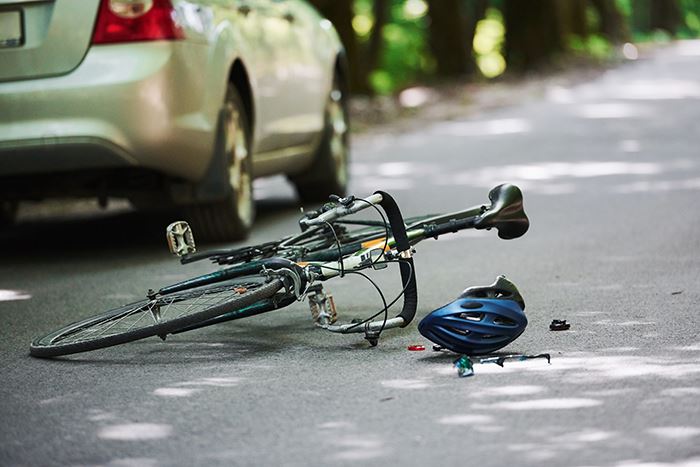
You were riding your bike when a driver ran a red light, opened a car door without looking, or turned right without checking the bike lane. Now you’re dealing with medical bills, a damaged bike, and time away from work while the driver’s insurance company tells you the claim is “under review.” The question every injured cyclist in Riverside asks is simple: who actually pays?
The answer depends on several factors, including who caused the crash, what insurance coverage is in play, and whether California’s comparative negligence rules reduce what you can recover. Getting those answers wrong, or accepting a settlement before you understand your full losses, can cost you far more than the initial offer suggests.
This article explains how liability works in Riverside bicycle accident cases, which parties can be held responsible, and what you need to do to protect your claim from the moment of impact forward.
Key Takeaways
- California’s pure comparative negligence rule means you can recover compensation even if you were partly at fault, though your percentage of fault reduces your award.
- The at-fault driver’s auto liability insurance is the most common source of recovery, but policy limits, uninsured drivers, and shared fault can all complicate a claim.
- If a government entity is responsible (a poorly maintained road, a missing bike lane warning), you must file a government tort claim within six months under Government Code §945.4 before suing.
- The statute of limitations for most bicycle accident claims in California is two years from the date of injury under CCP §335.1. Missing this deadline ends your right to recover.
- Rideshare drivers, commercial delivery vehicles, and fleet operators carry separate insurance obligations that can mean higher available coverage.
- An uninsured or underinsured motorist (UM/UIM) policy on your own auto insurance can cover you even in a bicycle crash if the at-fault driver has no coverage or insufficient limits.
- Accepting a quick settlement without knowing the full extent of your injuries often waives your right to additional compensation later.
Who Is Legally Liable for a Bicycle Accident in Riverside?
Liability in a Riverside bicycle accident case follows California’s fault-based system. The party whose negligence caused or contributed to the crash is responsible for the resulting damages. In many cases, more than one party shares responsibility.
The at-fault driver is the most common defendant. A motorist who fails to yield, speeds, runs a stop sign, or drives distracted owes a duty of care to every other road user, including cyclists. When that duty is breached and a collision results, the driver, and usually their auto liability insurance, is on the hook for medical expenses, lost wages, property damage, and pain and suffering.
Employers and fleet operators can be liable when the at-fault driver was working at the time of the crash. A delivery driver, trucking company employee, or rideshare driver on an active trip may expose their employer or the rideshare platform to liability under California’s respondeat superior doctrine.
Government agencies are liable when dangerous road conditions cause or contribute to a crash. A crumbling bike lane, a missing traffic signal, inadequate signage near a construction zone, or a pothole that forces a cyclist into traffic can all trigger a claim against the City of Riverside, Riverside County, or Caltrans. These claims are subject to strict procedural rules described below.
Vehicle or component manufacturers may be liable if a defect, such as a brake failure, a faulty door latch on a delivery truck, or a malfunctioning traffic signal, contributed to the crash. Product liability claims follow a separate legal theory from negligence but can run alongside a traditional personal injury case.
- Tip: Never assume only one party is responsible. A driver who struck you may have been speeding, while a broken crosswalk signal also contributed. A Riverside bicycle accident attorney can investigate all liable parties before you agree to any settlement.
How California’s Comparative Negligence Rule Affects Your Recovery
California uses a pure comparative negligence system, which means your compensation is reduced by your percentage of fault, but it is not eliminated even if you were mostly at fault. If a jury finds that your total damages are $200,000 and you were 20 percent at fault for riding outside the designated lane, you recover $160,000.
Insurance adjusters use comparative negligence aggressively. They may argue you were not wearing a helmet, were riding after dark without lights, failed to signal a turn, or were distracted. California law does not require adult cyclists to wear helmets, and a lack of a helmet does not bar your claim. However, insurers may still raise it to reduce their offer.
What matters is what the evidence actually shows. Witness statements, traffic camera footage, bike computer data, and accident reconstruction reports can all establish how the collision occurred and who bears the greater share of fault. Gathering this evidence quickly, before it disappears, is one of the most important steps you can take after a crash.
- Tip: Do not give a recorded statement to the at-fault driver’s insurance company before speaking with an attorney. Adjusters are trained to ask questions that suggest your own negligence, and those statements can be used against you throughout the case.
What Insurance Covers a Bicycle Accident in Riverside?
Several layers of insurance can apply, and knowing which policies to pursue is often the difference between a fair recovery and a lowball settlement.
The at-fault driver’s auto liability insurance is the first source of recovery in most cases. California requires drivers to carry at least $30,000 per person in bodily injury liability coverage, but serious bicycle accidents routinely produce injuries that exceed those minimums. When policy limits are inadequate, your own underinsured motorist (UIM) coverage may bridge the gap.
Your own auto insurance is worth reviewing even though you were on a bike. Most California auto policies include uninsured motorist (UM) and underinsured motorist (UIM) coverage that protects you when a negligent driver has no insurance or insufficient limits. UM/UIM coverage applies to bicycle crashes in many policies, though the exact terms depend on your carrier and policy language.
Rideshare and delivery platform insurance applies when the at-fault driver was working for a company like Uber, Lyft, DoorDash, or Amazon Flex at the time of the crash. California AB 5 and Transportation Network Company regulations require these platforms to carry significant liability coverage, up to $1 million per incident when a driver is on an active trip. This coverage can make a meaningful difference in cases involving serious injury.
Homeowner or renter insurance occasionally applies to bicycle claims in limited circumstances, particularly when the collision resulted from something other than a motor vehicle crash.
- Tip: A bicycle accident claim often involves multiple insurance policies. Resolving the claim against just one insurer without accounting for others may leave significant compensation on the table.
Government Road Defects and the Six-Month Filing Deadline
Riverside cyclists frequently deal with road hazards that are the responsibility of a public agency. Cracked asphalt along the Santa Ana River Trail, missing reflectors on Magnolia Avenue, or an unlit crossing near a school zone can all support a claim against a government entity.
However, claims against government agencies operate on a different timeline than standard personal injury claims. Under Government Code §945.4, you must file a government tort claim with the responsible agency within six months of the date of the incident. If you miss that window, you generally lose the right to sue the government, even if the underlying negligence is clear.
The claim must name the agency, describe the dangerous condition, describe your injuries, and state the amount of damages you are seeking. Once the claim is filed, the agency has 45 days to respond. If they deny the claim, you then have six months from the denial to file suit.
Many injured cyclists do not realize a government entity played a role until weeks after the accident. If you were knocked off your bike by a pothole, a raised utility cover, or an unmarked construction zone, talk to an attorney promptly. Waiting can cost you a valid claim.
- Tip: Photograph the road defect that caused or contributed to your crash as soon as possible. Government agencies repair hazardous conditions quickly once a claim is filed, and the photographic evidence taken immediately after the crash may be the only proof of what the road looked like that day.
The Statute of Limitations for Riverside Bicycle Accident Claims
Under CCP §335.1, the standard statute of limitations for personal injury claims in California is two years from the date of injury. For a wrongful death claim arising from a fatal bicycle accident, the same two-year period begins from the date of the victim’s death.
Two years sounds like enough time, but it disappears faster than most people expect. Building a strong case requires obtaining medical records, securing accident reconstruction evidence, locating witnesses, and negotiating with insurers before filing a lawsuit. Attorneys need time to do that work properly. Waiting until the deadline is near limits your attorney’s options and can weaken your negotiating position.
The two-year period can be paused, or “tolled,” in limited circumstances, such as when the injured person is a minor, when the defendant concealed their identity, or when the injured party was mentally incapacitated. These exceptions are narrow. The safest rule is to treat the two-year clock as firm and contact an attorney well before it expires.
If a government entity is involved, the practical deadline is even shorter given the six-month government claim requirement discussed above.
What Damages Can a Riverside Cyclist Recover?
A successful bicycle accident claim can cover both economic and non-economic losses. Economic damages are the calculable, out-of-pocket costs of the crash. Non-economic damages compensate for the human losses that do not come with a receipt.
Economic damages typically include: – Emergency room treatment, surgery, hospitalization, and follow-up care – Physical therapy and rehabilitation – Prescription medications and medical equipment – Lost wages and lost earning capacity if the injuries affect your ability to work – Bicycle replacement or repair costs – Transportation costs for medical appointments
Non-economic damages include: – Physical pain and suffering – Emotional distress and anxiety – Loss of enjoyment of activities you could do before the crash – Disfigurement or permanent physical limitation – Loss of consortium if a spouse was affected by your injuries
In cases involving intentional misconduct or extreme recklessness, California courts can also award punitive damages, though these are relatively rare in bicycle accident cases.
The total value of your claim depends on the severity of your injuries, how long recovery takes, and how the injuries affect your daily life and work. Traumatic brain injuries, spinal cord damage, and fractured limbs are common outcomes in serious cycling crashes and often justify significantly higher compensation than soft-tissue injuries.
How Vetchtein Law Handles Riverside Bicycle Accident Claims
Attorney Robert Vetchtein has practiced personal injury law since 2004. His firm handles bicycle accident claims throughout Riverside, San Bernardino, Newport Beach, and the wider Inland Empire and Orange County, with a focus on clients who have been seriously injured and are being undervalued by insurance companies.
The firm’s approach starts with a free case evaluation. During that conversation, you describe what happened, ask questions, and get a candid assessment of your options, without any obligation and without any fee. If you decide to move forward, Vetchtein Law handles your case on a contingency basis: there is no fee unless the firm wins your case.
Once your case is active, the firm investigates the accident scene, gathers evidence, identifies all liable parties and insurance policies, handles communications with adjusters, and builds the damages case your full losses support. If an insurer refuses to offer fair compensation, the firm is prepared to litigate. The combination of investigative resources and courtroom readiness is often what motivates insurers to negotiate seriously.
If you are dealing with a Riverside bicycle accident and are not sure whether your situation warrants a legal claim, the free evaluation is the right first step. Vetchtein Law is available 24 hours a day, seven days a week. Call (888) 963-9999 or visit our Riverside personal injury page to learn more about how the firm serves injured clients in this region.
You can also learn more about Robert Vetchtein’s background and approach on the firm’s About page.
Frequently Asked Questions
Can I file a bicycle accident claim in Riverside if the driver left the scene?
Yes. Hit-and-run accidents create additional challenges, but they do not eliminate your options. Your own uninsured motorist coverage may apply if the at-fault driver is never identified. If you have a dashcam, witnesses, or nearby surveillance footage, law enforcement may still locate the driver. Contact an attorney quickly to preserve evidence and explore all available coverage.
What if I was not wearing a helmet when the accident happened?
California law does not require adult cyclists to wear helmets. The lack of a helmet does not bar your claim, though an insurer may argue it contributed to the severity of your head injuries. Your attorney can address this argument with medical evidence and applicable case law.
How long do I have to file a bicycle accident lawsuit in California?
The general rule under CCP §335.1 is two years from the date of injury. If a government entity, such as the City of Riverside or Caltrans, is involved, you have just six months from the incident date to file a government tort claim before that deadline. Speak with an attorney as soon as possible to protect your right to recover.
What if the driver’s insurance offers me a settlement right away?
Quick settlements are designed to close your claim before you understand the full extent of your injuries or losses. Once you accept and sign a release, you typically cannot seek more compensation, even if your medical condition worsens. Do not sign anything from an insurer before getting a legal opinion on the value of your claim.
Does bicycle accident compensation cover my medical bills if I cannot pay them now?
Most personal injury attorneys, including Vetchtein Law, can help coordinate medical liens that allow providers to treat you now with the understanding that they will be paid from your eventual settlement or judgment. You generally do not need to pay out-of-pocket for injury treatment while your case is pending.
Can I still recover compensation if I was partly at fault for the crash?
Yes. California’s pure comparative negligence rule allows you to recover damages even if you share some responsibility for the accident. Your compensation is reduced by your percentage of fault, but you are not barred from recovery. The insurer will attempt to assign you as much fault as possible; having an attorney negotiate on your behalf often produces a more accurate and favorable determination.
If you were injured in a bicycle accident in Riverside or anywhere in Southern California, the decisions you make in the first days and weeks significantly affect your claim. Vetchtein Law offers a free case evaluation, 24/7 availability, and contingency-only representation so that cost is never a barrier to getting experienced legal help.
Call (888) 963-9999 or contact us at our contact page today. There is no fee unless we win.
Meet attorney Robert Vetchtein.
This article is for informational purposes only. It is not legal advice and does not create an attorney-client relationship. Laws and deadlines change, and every case is different, so speak with a qualified California attorney about your situation.