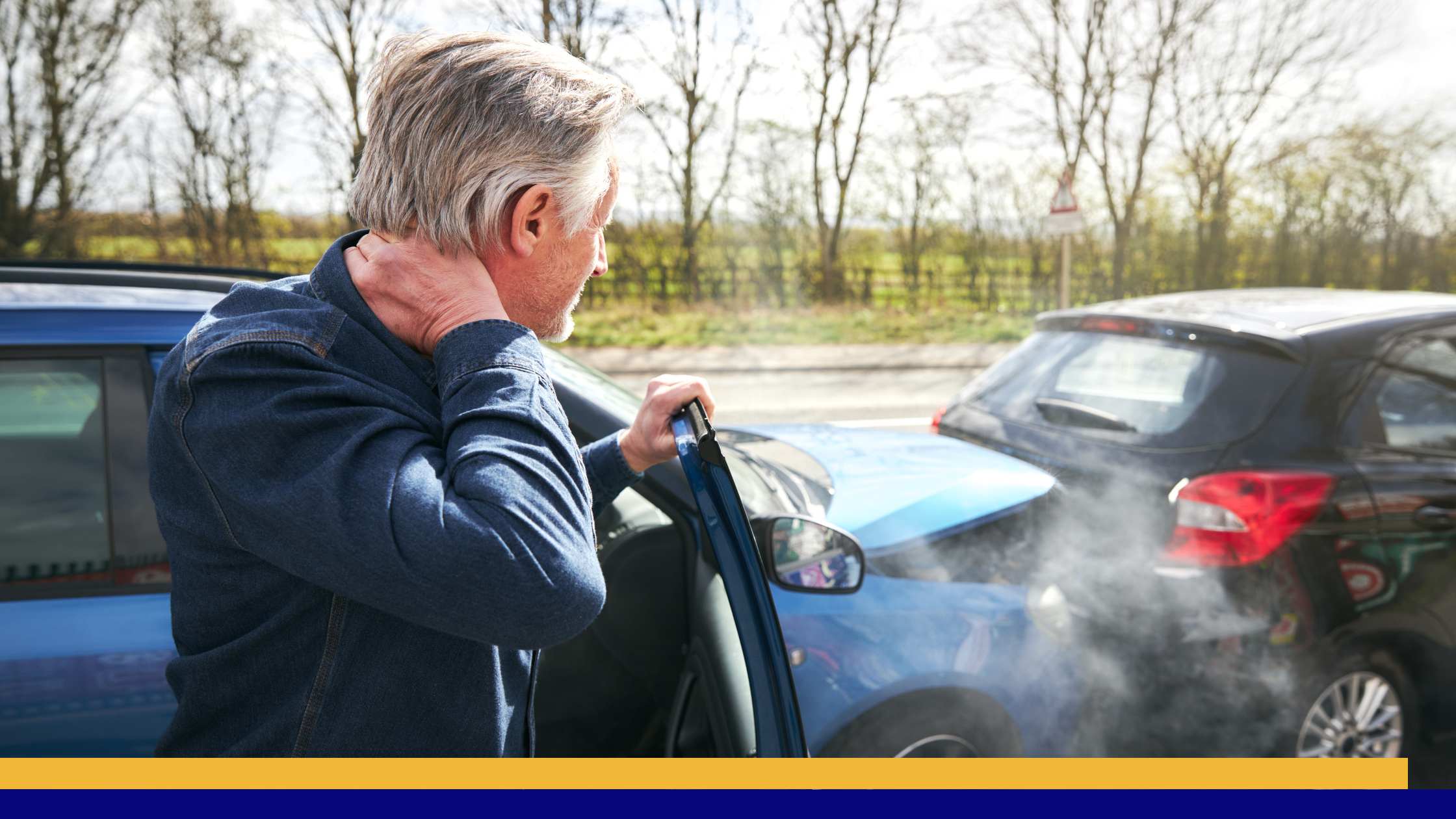
The moments after a car accident are disorienting. Your adrenaline is spiking, other drivers may be stopped in the road, and you are trying to process what just happened while your phone rings and someone is shouting about their car. What you do in these first minutes and hours can significantly affect whether you recover full compensation for your injuries, or whether an insurance adjuster uses your own actions against you.
California handles car accident claims under a pure comparative negligence standard, which means every decision you make at the scene, every statement you give, and every piece of evidence you preserve becomes part of how your claim is valued. A careless comment at the scene, a gap in medical care, or a single social media post can reduce your recovery by thousands of dollars.
This guide gives you a step-by-step checklist of exactly what to do immediately after a car accident in California, from the first moments on the road to the days that follow.
Key Takeaways
- Your first priority is safety. Get out of traffic if you can do so without aggravating your injuries.
- Always call 911 and get a police report, even for minor crashes.
- Preserve evidence before vehicles are moved: photos, video, and witness contact information.
- Never admit fault or apologize at the scene. California’s comparative fault rules mean even partial blame reduces your compensation.
- See a doctor the same day, even if you feel fine. Delayed symptoms are common in car accidents.
- Report the accident to the California DMV within 10 days if there were injuries, death, or property damage over $1,000.
- Contact a California personal injury attorney before speaking with any insurance adjuster.
Step 1: Get to Safety and Call 911
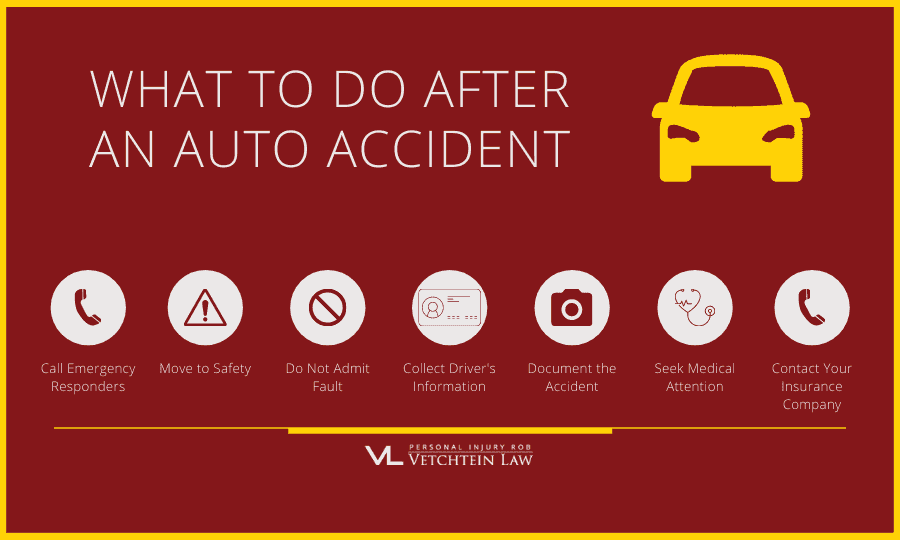
Your first move is to protect yourself and anyone else at the scene. If your vehicle can be moved and doing so will not worsen any injuries, pull to the shoulder or a nearby parking lot. Turn on your hazard lights and stay behind the guardrail or barrier if you are on a freeway.
Call 911 even if the crash appears minor. A police report creates an official record of the accident and is often required by insurance companies when you file a claim. Without one, disputed facts come down to your word against the other driver’s. Request that officers document any visible injuries and conditions at the scene before writing their report.
- Tip: Ask the responding officer for the report number before they leave. You will need it to request a copy of the final report, typically available within 5 to 10 business days.
Step 2: Check for Injuries
Do not assume you are uninjured because you feel no pain. Adrenaline is a powerful short-term analgesic, and injuries like whiplash, soft-tissue damage, and traumatic brain injury often produce no noticeable symptoms for 24 to 72 hours after the crash.
Check on other drivers and passengers without moving anyone who may have a spinal or neck injury unless they are in immediate danger from fire or oncoming traffic. Wait for emergency medical personnel to assess and move seriously injured crash victims.
Step 3: Document the Scene Thoroughly
Use your phone to capture as much evidence as possible before vehicles are moved or the scene changes. Photograph and video the following:
- All vehicles involved, from every angle, with close-up shots of each point of impact and all license plates.
- The road surface, skid marks, debris field, and any nearby traffic control devices such as stop signs, signals, and crosswalk markings.
- Your visible injuries, and return to photograph bruising as it develops over the following 48 to 72 hours.
- The other driver’s license, insurance card, and vehicle registration.
- Any dashcam footage on your vehicle. Preserve it immediately to prevent the recording from being overwritten.
- Tip: Record a brief video narration at the scene describing what you remember about the crash sequence, the weather and road conditions, and any statements the other driver made. This time-stamped account captures context that photographs alone cannot preserve.
Step 4: Exchange Information and Nothing Else
Collect the following from every driver involved in the crash:
- Full name and contact information
- Driver’s license number and state of issuance
- Vehicle license plate number and state
- Insurance company name and policy number
- Vehicle make, model, year, and color
Collect contact information from any witnesses before they leave. Independent witness statements often determine the outcome of disputed-liability claims.
Do not discuss fault. Do not say “I’m sorry” or “I didn’t see you.” Do not volunteer your account of what caused the accident to anyone except the police officer taking the report. California operates under pure comparative negligence, meaning any percentage of fault attributed to you reduces your compensation by that same share. A casual apology at the scene can become an admission used against your claim. For more on the errors that cost accident victims the most, see our guide to mistakes to avoid after a car accident.
Step 5: Report the Accident to Law Enforcement and the California DMV
California law requires every driver involved in an accident to report it to the California Department of Motor Vehicles using Form SR-1 within 10 days if the accident resulted in any injury, death, or property damage that appears to exceed $1,000. This obligation is separate from the police report and applies regardless of fault.
Failing to file the SR-1 can result in a driver’s license suspension. Your insurer sometimes files this report on your behalf, but verify that they did so. Once you have retained an attorney, your legal team can handle this filing for you.
Step 6: Seek Medical Attention the Same Day
Go to an emergency room, urgent care center, or your primary care physician on the day of the accident. This matters for two reasons: it ensures potentially serious injuries are identified before they worsen, and it creates a medical record that directly connects your injuries to the crash.
Insurance adjusters routinely deny or undervalue claims by pointing to a gap between the date of the accident and the first medical visit. A delay gives them grounds to argue the injuries were not serious, were pre-existing, or were caused by something else. A same-day or next-day visit makes that argument much harder to sustain.
- Tip: Tell your treating physician specifically that you were injured in a car accident. The medical record must document the mechanism of injury as an MVA (motor vehicle accident), not just your symptoms in isolation. That causal link is essential when calculating medical damages in your claim.
Step 7: Notify Your Own Insurance Company with Care
California is a fault state. The at-fault driver’s liability insurance is the primary source of compensation for your injuries and property damage. Even so, you are required to notify your own insurer about the accident promptly under the terms of your policy.
Report the basic facts: the date, time, location of the accident, and that a crash occurred. Do not give a recorded statement to any insurance adjuster, including your own, without first speaking with an attorney. Adjusters are trained to ask questions designed to elicit statements that limit the value of your claim.
If the at-fault driver was uninsured or underinsured, your own uninsured and underinsured motorist (UM/UIM) coverage becomes critical. California requires insurers to offer UM/UIM coverage; if you waived it or reduced limits, verify exactly what your policy provides before assuming you are protected. Your attorney can identify all available coverage sources, including umbrella policies and commercial liability if a company vehicle was involved.
Step 8: Preserve All Evidence and Records
From the moment of the crash forward, keep every document related to the accident and your injuries:
- Medical bills, treatment records, prescription receipts, and records of every healthcare provider you visit.
- Lost wage documentation from your employer, including pay stubs and a written statement of missed workdays.
- A personal injury journal documenting your daily pain levels, sleep disruption, activities you can no longer perform, and any emotional or psychological impact.
- All written communications with insurance companies. Follow up phone calls with an email confirming what was discussed.
Do not post anything about the accident or your injuries on social media. Insurance adjusters monitor plaintiffs’ social media profiles. A photograph of you at an event weeks after a crash can be used to argue your injuries are less severe than claimed, even when that photograph does not capture the full reality of your condition.
Step 9: Know California’s Statute of Limitations
Under California Code of Civil Procedure Section 335.1, you have two years from the date of the accident to file a personal injury lawsuit. Two years may seem like a substantial window, but building a strong case takes time: gathering complete medical records, retaining accident reconstruction experts if needed, obtaining the final police report, identifying all liable parties, and negotiating with insurers.
If your accident involved a government vehicle, a government employee acting in the scope of their duties, or occurred on government-maintained property, you must file an administrative tort claim with the responsible agency within six months. Missing that shorter deadline permanently bars your right to sue. An attorney can identify which deadlines apply to your specific case.
Step 10: Consult a California Car Accident Attorney Before Accepting Any Settlement
Insurance companies settle claims quickly when it is to their advantage, which is rarely to yours. A fast settlement offer, particularly one made before you know the full extent of your injuries, is almost always a low one. Once you sign a release, you give up all future claims arising from that accident, even if your condition worsens. Read more about why you shouldn’t settle with an insurance company before you sign anything.
Before you accept any payment or sign any document, consult with a California personal injury attorney. An experienced attorney evaluates the complete value of your claim: current and future medical expenses, lost income and loss of earning capacity, pain and suffering, emotional distress, and the impact of California’s comparative negligence rules if the insurer attempts to assign you partial fault.
If you were injured in San Bernardino, our San Bernardino car accident attorneys and Riverside car accident team handle cases across the Inland Empire. Victims along the coast can work with our Newport Beach car accident attorneys.
Why the Hours After a Crash Matter for Your California Claim
Attorney Robert Vetchtein has represented car accident victims in Southern California since 2004. The pattern he encounters most often: clients who waited days to seek medical care, gave recorded statements to adjusters before speaking with counsel, or made casual comments on social media after the crash. Each of those decisions gave the insurer a specific argument to reduce an otherwise strong claim.
Vetchtein Law handles car accident cases on a contingency-fee basis. You pay nothing upfront and owe no attorney fees unless we win your case. Our team is available 24 hours a day, 7 days a week, including the evening of your accident, for a free initial case evaluation. Whether your crash happened in San Bernardino, Riverside, Newport Beach, Fontana, or anywhere in the Inland Empire or Orange County, we represent clients across Southern California with no geographic limitation for catastrophic or high-value cases.
Frequently Asked Questions
Do I need a lawyer if the other driver was clearly at fault?
California’s pure comparative fault system allows insurers to argue partial fault on your part even when the other driver caused the crash. An adjuster may assign you 10, 20, or 30 percent of the blame to reduce your payout proportionally. An experienced attorney can challenge those assignments and ensure your recovery is not artificially reduced. Representation is especially important when injuries are serious or damages are substantial.
What if my injuries don’t appear until days after the accident?
Delayed symptoms are common after car accidents. Whiplash, soft-tissue injuries, and traumatic brain injury frequently produce symptoms hours or days after the crash. Seek medical attention the same day regardless, and return when new symptoms develop. As long as your medical records document the connection between the delayed symptoms and the accident, those injuries remain compensable under California law.
Do I have to report a minor fender-bender to the California DMV?
Yes, if the accident resulted in any injury, however minor, or in property damage that appears to exceed $1,000. You must file Form SR-1 with the California DMV within 10 days. Your insurer often files this on your behalf, but the obligation is yours to confirm. Failure to file can result in a license suspension even when you were not at fault.
What if the other driver has no insurance?
California requires insurers to offer uninsured and underinsured motorist coverage. If you carry UM/UIM coverage, your own policy steps in when the at-fault driver lacks adequate insurance. Your attorney can also investigate other potential sources of recovery, including commercial policies if a business vehicle was involved, or employer liability if the driver was on the job at the time of the crash.
How long do California car accident cases typically take to resolve?
Cases involving relatively minor injuries and clear liability often settle within three to six months after medical treatment is complete. Cases with serious injuries, disputed fault, or significant damages can take one to two years or longer to resolve, particularly if a lawsuit must be filed. Settling before your medical prognosis is fully established almost always results in leaving compensation on the table.
Protect Your Claim Starting Now
The steps you take in the hours after a car accident in California set the foundation for your entire injury claim. Document everything, get medical care immediately, avoid recorded statements to adjusters, and consult an attorney before signing any settlement documents.
Vetchtein Law offers a free case evaluation, contingency-only representation, and 24/7 availability for accident victims across Southern California. If you or a family member was injured in a crash, contact us today at (888) 963-9999 or visit our contact page. There is no fee unless we win.
This article is for informational purposes only. It is not legal advice and does not create an attorney-client relationship. Laws and deadlines change, and every case is different, so speak with a qualified California attorney about your situation.