The holiday shopping season fills Southern California malls with crowded walkways, hastily arranged merchandise displays, and floors slicked with rain tracked in from parking lots. One moment you are walking toward a store entrance and the next you are on the ground, in pain, and confused about what just happened. Slip and fall injury California victims face a situation that changes quickly: store employees may deny anything was wrong, security footage gets overwritten, and insurance adjusters begin minimizing your claim before you have even seen a doctor.
California law does give injured shoppers meaningful legal recourse, but that recourse depends on what you do in the hours and days after the fall. Property owners and mall operators have a legal duty to keep their premises reasonably safe for visitors. When they fail to meet that standard and you are hurt as a result, premises liability law allows you to hold them accountable. This article explains exactly who can be held responsible for a holiday mall slip and fall, what California law requires you to prove, and the steps that protect your right to compensation.
Key Takeaways
- California property owners owe a duty of reasonable care to shoppers under the state’s premises liability doctrine. A failure to inspect, repair, or warn of known hazards can constitute negligence.
- Mall operators, individual store tenants, and third-party cleaning or maintenance contractors may each share liability depending on where the fall occurred and who controlled that space.
- California’s pure comparative negligence rule means you can recover damages even if you were partly at fault for the fall. Your award is reduced by your percentage of fault, not eliminated.
- You generally have two years from the date of the injury to file a personal injury lawsuit under California Code of Civil Procedure §335.1. Missing this deadline typically bars your claim.
- Prompt evidence preservation is critical. Surveillance footage is often overwritten within 30 to 72 hours, and physical hazards get cleaned up or repaired quickly after an incident.
- Medical documentation that starts on the day of the fall strengthens the connection between the accident and your injuries. Gaps in treatment give insurers an argument against your claim.
- An experienced California premises liability attorney can identify every responsible party, calculate the full scope of your losses, and negotiate against mall and retail insurance carriers who handle these claims routinely.
Who Has a Legal Duty to Keep You Safe
Shopping malls are not operated by a single entity. When a slip and fall injury happens at a California mall during the holidays, multiple parties may owe you a duty of care, and more than one of them may be liable for your injuries.
The mall owner or management company controls common areas: walkways, atriums, restrooms, food courts, parking structures, and entrances. They are responsible for inspecting these spaces regularly and correcting hazards they knew about or reasonably should have discovered. A wet floor from a roof leak near a mall entrance, a cracked tile in a common corridor, or a seasonal decoration that obstructs sightlines can all give rise to liability if the mall failed to identify and address the problem in a reasonable time.
Individual store tenants control the floor space inside their leased premises. If you slipped inside a retail store on a product spill, a freshly mopped floor with no warning sign, or merchandise displayed in a walkway, the store tenant may be primarily responsible. Lease agreements between tenants and mall owners sometimes allocate responsibility for specific areas, but that internal agreement does not limit your right to bring a claim.
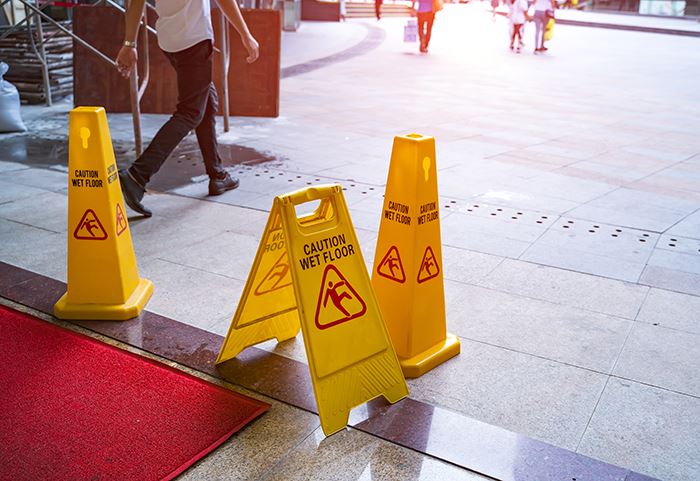
Third-party contractors such as janitorial services, maintenance companies, and seasonal staffing crews introduce another layer of potential liability. If a cleaning crew left a floor wet without placing cones or a crew stringing holiday lights created a tripping hazard, the contractor may share responsibility alongside the property owner who hired them.
- Tip: Ask mall security or management to identify the business entity that controls the area where you fell and the name of any cleaning or maintenance contractor on site that day. This information is most accessible in the immediate aftermath of the incident.
What California Law Requires You to Prove
A successful slip and fall injury claim in California rests on four elements of negligence under the state’s premises liability doctrine.
Duty. California law establishes that property owners owe a duty of ordinary care to people who enter their premises. For a shopping mall open to the public during business hours, every customer who walks through the door is an invitee, and the owner owes that person the highest level of care owed to any visitor.
Breach. You must show that the property owner, tenant, or contractor failed to meet that standard of care. This typically means proving that a dangerous condition existed, that the responsible party knew or should have known about it through reasonable inspection, and that they failed to fix it or warn you within a reasonable time.
Causation. The breach of duty must be the direct and proximate cause of your injuries. Insurers often argue that a pre-existing condition, not the fall, is the real source of your pain. Medical records that document new or worsened injuries starting the day of the fall are your strongest counter to this argument.
Damages. You must have suffered actual, compensable harm: medical bills, lost wages, physical pain, emotional distress, and loss of enjoyment of life are all recognized categories of damages under California law.
- Tip: California follows a pure comparative negligence rule. If an adjuster or defense attorney argues that you were texting on your phone when you fell and assigns you 25 percent of the fault, your total compensation is reduced by 25 percent, not eliminated. Do not assume partial fault ends your case.
Common Holiday Hazards That Lead to Slip and Fall Claims
The holiday shopping season creates a specific set of conditions that dramatically increase slip and fall risk at California malls. Understanding these hazards helps you document why the property owner’s failure was unreasonable.
Rainwater tracked inside from parking lots creates wet entryways that dry slowly when foot traffic is high. California weather in November through January brings sporadic but heavy rain across the Inland Empire, Orange County, and coastal communities, and mall operators in regions like San Bernardino and Riverside know this pattern well enough that a lack of adequate matting and warning signs at entrances is difficult to excuse.
Seasonal merchandise displays placed in walkways narrow the path shoppers take and obstruct views of floor hazards. Temporary food and gift vendors added for the holiday season often use extension cords across pedestrian areas. Spills in food courts increase with capacity. Broken paving in exterior plazas, cracked parking structure ramps, and poorly lit stairwells are hazards present year-round but encounter more foot traffic and less oversight during the holiday rush.
- Tip: If you fell near a seasonal display, kiosk, or food vendor, photograph the display and its placement in relation to where you landed. The temporary nature of these setups often means the responsible party has little documentation of safety inspections, which works in your favor.
Steps to Take After a Mall Slip and Fall Injury
What you do in the minutes and days following a holiday slip and fall injury in California directly affects what you can recover.
Report the incident immediately. Tell mall security or a store manager on the spot. Request a written incident report and get a copy before you leave. If they refuse to provide one, write down the name of the person you spoke with, the time, and what they said.
Document the hazard before it disappears. Photograph the exact location of your fall, the specific hazard that caused it, any wet floor signs that were or were not present, the lighting conditions, and your injuries. Shoot from multiple angles. If bystanders witnessed the fall, ask for their names and contact information.
Seek medical care the same day. An emergency room or urgent care visit on the day of the fall creates an official record linking your injuries to the incident. Even if your pain seems manageable, some injuries, including soft tissue damage and fractures, worsen over the next 24 to 48 hours.
Preserve your clothing and footwear. Defense attorneys and insurance carriers frequently argue that a victim’s shoes were inappropriate for the conditions. Save what you were wearing in a paper bag without washing it.
Request footage in writing. Send a written request to mall management and the store where you fell asking them to preserve all surveillance footage from the area and time of your incident. Without this notice, footage is routinely deleted within 30 to 72 hours.
Avoid recorded statements to insurers. Mall and retail insurance carriers will call quickly after a reported incident. They are not calling to help you. Decline to give a recorded statement until you have spoken with an attorney.
- Tip: Under California Code of Civil Procedure §335.1, you have two years from the date of your injury to file a personal injury lawsuit. While two years sounds like ample time, evidence disappears faster than deadlines approach. Contact an attorney as soon as your medical condition allows.
Why the Right Attorney Matters for Your Slip and Fall Injury Case
Mall operators and national retailers carry substantial liability insurance and employ defense teams experienced in minimizing premises liability claims. They know which arguments work against unrepresented claimants, and they use them. An injured shopper going up against that apparatus alone almost always leaves money on the table.
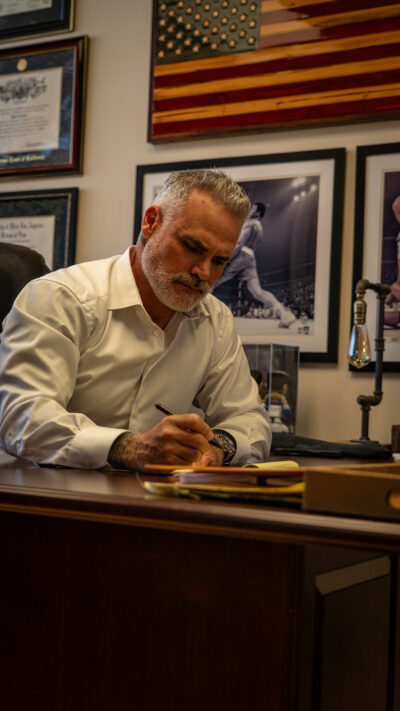
Robert Vetchtein has practiced personal injury law in Southern California since 2004. That means two decades of handling premises liability cases against commercial property owners, retail chains, and their insurers, across the Inland Empire, Orange County, and the broader SoCal region. If you suffered a slip and fall injury in California at a mall in San Bernardino, Riverside, Fontana, Newport Beach, or anywhere in Orange County, the San Bernardino personal injury attorneys and Riverside personal injury attorneys at Vetchtein Law are prepared to evaluate your claim immediately.
The firm takes premises liability cases on a contingency fee basis. You pay nothing out of pocket, and there is no attorney fee unless Vetchtein Law recovers compensation for you. Free case evaluations are available 24 hours a day, seven days a week. If you need representation with a Fontana personal injury claim or across Newport Beach and Orange County, the firm’s reach covers the full Southern California footprint.
You can learn more about attorney Robert Vetchtein and the firm’s approach to California personal injury cases before your consultation. Every case gets direct attention from an experienced attorney, not a case manager or a paralegal handling a volume caseload.
Frequently Asked Questions
Can I sue a shopping mall for a slip and fall injury in California?
Yes. If a mall operator, store tenant, or maintenance contractor failed to maintain a safe premise and that failure caused your injuries, California premises liability law allows you to pursue a personal injury claim against them. You must be able to show that a dangerous condition existed and that the responsible party knew or should have known about it.
What if the mall claims they did not know about the hazard?
A property owner does not have to have actual knowledge of a hazard if the hazard existed long enough that a reasonable inspection would have found it. Courts look at how long the dangerous condition was present, how frequently the area was inspected, and whether inspection records exist. A wet floor from a holiday shopper’s spill that sat for 45 minutes in a high-traffic corridor is a different situation than one that appeared 90 seconds before you fell.
How long do I have to file a slip and fall lawsuit against a California mall?
Under California Code of Civil Procedure §335.1, the general statute of limitations for personal injury claims is two years from the date of injury. If the mall is owned or managed by a government entity, such as a publicly operated facility, California Government Code §945.4 requires you to file a government tort claim within six months of the incident before you can sue. An attorney can confirm which deadline applies to your case.
What compensation can I recover for a mall slip and fall injury?
California allows injured premises liability victims to recover medical expenses (past and future), lost wages and earning capacity, physical pain and suffering, emotional distress, and costs related to ongoing rehabilitation or disability. The value of your claim depends on the severity of your injuries, the clarity of the property owner’s negligence, and the strength of your documentation.
Does California’s comparative negligence rule hurt my case if I was partially at fault?
It reduces your recovery, but it does not eliminate it. California follows a pure comparative negligence system, which means even if you were 40 percent responsible for your fall, you can still recover 60 percent of your proven damages. Insurance adjusters often exaggerate a claimant’s fault percentage to reduce payouts. An attorney negotiates against that tactic directly.
What if I did not go to the hospital right after the fall?
A gap between your fall and your first medical visit makes the claim harder to prove but does not make it impossible. Seek treatment as soon as possible and document the reason for the delay if there was one. Physical evidence, witness accounts, and the incident report can help establish the connection between the accident and your injuries even when there is a short delay in treatment.
If you suffered a slip and fall injury at a California shopping mall this holiday season, Vetchtein Law is ready to review your case at no cost. The firm offers free case evaluations, 24/7 availability, and contingency-only representation across San Bernardino, Riverside, Newport Beach, Fontana, the Inland Empire, and Orange County. Call (888) 963-9999 or visit our contact page to speak with the team today. There is no fee unless we win.
This article is for informational purposes only. It is not legal advice and does not create an attorney-client relationship. Laws and deadlines change, and every case is different, so speak with a qualified California attorney about your situation.