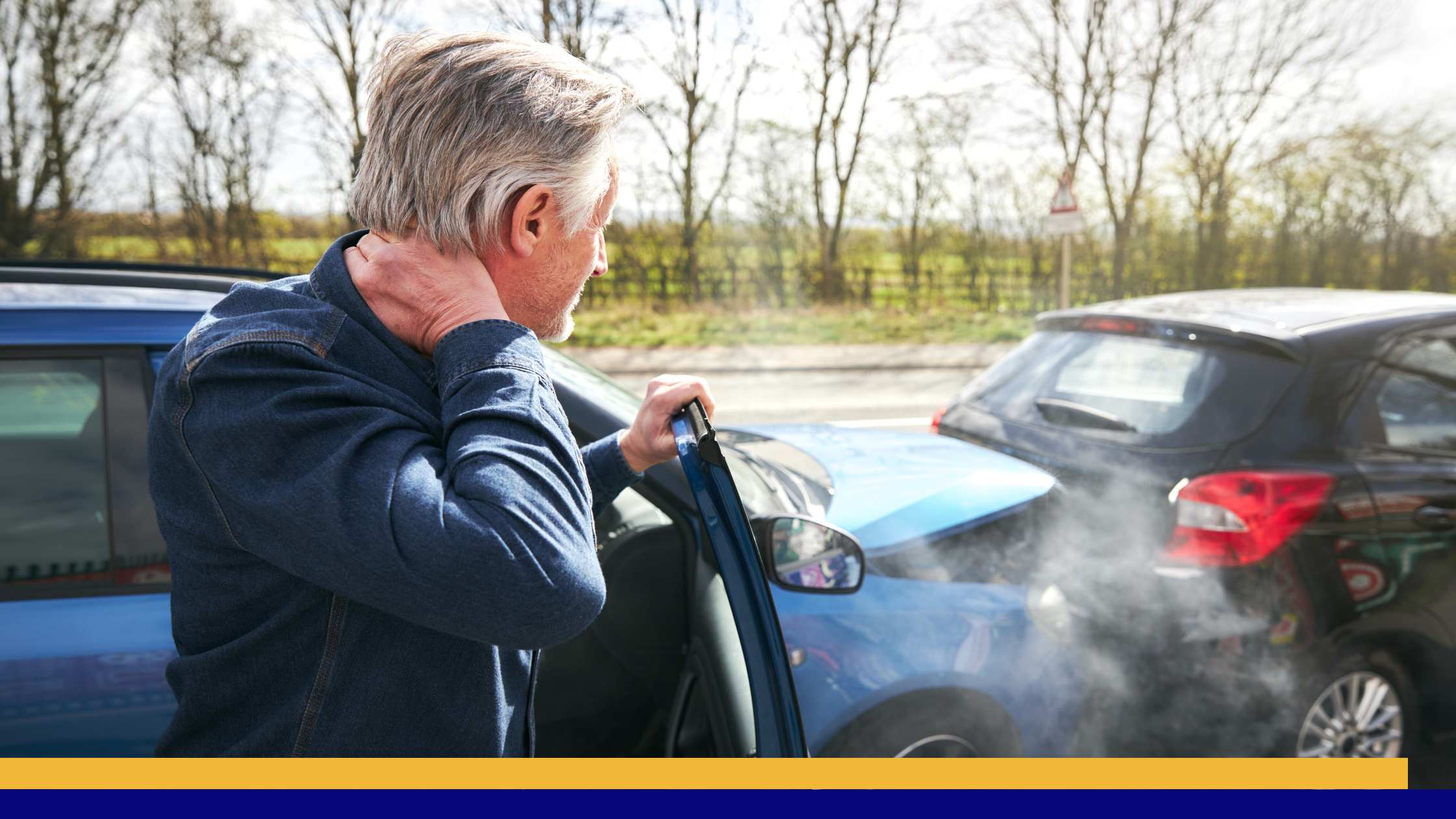
You ordered a ride, stepped in, and trusted a stranger behind the wheel. Now you’re sitting in an ER or standing on the side of the road after a crash, wondering what happens next. Rideshare accidents are nothing like ordinary car accident claims. The driver may not own the vehicle outright, the insurance picture changes depending on what the app was doing at the moment of impact, and two massive corporations, Uber and Lyft, have spent years and millions of dollars making it harder for injured passengers and third parties to collect what they deserve.
California law gives you powerful rights after a rideshare crash, but those rights come with deadlines, proof requirements, and insurance traps that can eliminate your claim before it ever starts. If you were hurt as a passenger, a pedestrian, a cyclist, or the driver of another car, you need to understand exactly how liability works, because the answer changes depending on a single factor: whether the app was active.
This article explains the California rules that govern Uber and Lyft accident claims, walks you through the insurance layers you will encounter, and tells you what steps to take right now to protect your recovery.
Key Takeaways
- California law requires Uber and Lyft to carry $1 million in liability coverage when a driver has accepted a ride or has a passenger on board.
- When the app is open but no ride is accepted, the coverage drops to a lower “Period 1” policy, and your options narrow.
- The driver’s personal auto insurance almost always excludes commercial activity, which means gaps in coverage are common.
- You have two years from the date of the crash to file a personal injury lawsuit under California Code of Civil Procedure section 335.1.
- California follows pure comparative negligence, even if you were partially at fault, you can still recover damages reduced by your percentage of fault.
- Evidence, especially the app’s timestamp data, disappears fast. Preserving it immediately is critical.
- An Uber Lyft accident lawyer in California can issue evidence holds and negotiate with multiple insurers so you do not have to.
The Three Insurance Periods You Need to Understand
Before you can figure out who pays, you need to know where in the rideshare timeline the crash happened. California’s Public Utilities Code, along with rules set by the California Public Utilities Commission (CPUC), divides rideshare activity into three distinct coverage periods. The coverage available to you depends entirely on which period was active at the moment of impact.
Period 0, App is off. The driver is running personal errands with no ride pending. Only the driver’s personal auto insurance applies. That policy will almost certainly exclude any commercial activity if the driver was logged into the app even briefly. Coverage may be denied, leaving you with only the driver’s personal liability limits, often the California minimum of $30,000 per person.
Period 1, App is on, no ride accepted yet. The driver is available and waiting for a match. Here, Uber and Lyft’s contingent liability coverage kicks in, but at reduced limits: $50,000 per person, $100,000 per accident, and $25,000 in property damage. This is the most dangerous zone for injured parties because the TNC (transportation network company) coverage is limited and the personal policy is excluded.
Period 2 and Period 3, Ride accepted through passenger drop-off. Once a driver accepts a ping and throughout the entire trip until the passenger exits the vehicle, both Uber and Lyft maintain $1 million in third-party liability coverage plus contingent uninsured/underinsured motorist coverage. This is the strongest protection available, and it covers passengers, pedestrians, cyclists, and occupants of other vehicles.
- Tip: The app’s GPS and timestamp data will tell you exactly which period was active. Uber and Lyft keep this data on their servers. Your attorney can send a preservation letter demanding they retain it before it is purged in routine data cycles.
Why the Driver’s Personal Insurance Won’t Help You
Most Uber and Lyft drivers do not tell their personal auto insurer that they are driving for hire. Personal auto policies in California almost universally contain a livery exclusion: a clause that voids coverage the moment the vehicle is used to carry passengers for compensation. When an insurer discovers a crash happened during a rideshare trip, they will investigate the app status and may deny the claim entirely.
This means you cannot simply file a claim with the driver’s personal insurer after a rideshare crash and expect to be paid. In Period 1, the TNC’s contingent coverage only pays after the personal policy has denied the claim, which creates a delay and often a dispute about which policy applies. In Periods 2 and 3, the $1 million TNC policy is primary, which simplifies things, but insurers still look for reasons to reduce your payout.
Do not give a recorded statement to any insurance company, the driver’s insurer or the TNC’s insurer, before speaking with a lawyer. Adjusters are trained to ask questions that lock you into statements they can use to minimize your claim.
- Tip: Screenshot the Uber or Lyft app on your phone immediately after the crash if you can do so safely. The ride receipt will show the driver’s name, the trip start and end time, and the vehicle information, all of which help confirm which coverage period applies.
What to Do After a Rideshare Accident in California
Step 1: Get Medical Care First
Your health is the only thing that matters in the minutes after a crash. Call 911. Even if you feel fine, accept evaluation at the scene and follow up with a doctor within 24 to 48 hours. Soft tissue injuries, concussions, and internal trauma often do not produce visible symptoms immediately. A gap in your medical treatment, even a day or two, becomes a document in the insurer’s file labeled “delayed care,” and adjusters use it to argue your injuries were not caused by the crash.
Keep every medical record, discharge summary, prescription, and physical therapy note. These documents are the foundation of your damages claim.
Step 2: Document the Scene
If you are physically able, gather the following before leaving the scene:
- Full name, driver’s license number, and insurance information for the Uber or Lyft driver
- The vehicle’s license plate, make, model, and color
- The rideshare company’s name displayed in the app
- Names and phone numbers of any witnesses
- Photos of all vehicles involved, your visible injuries, skid marks, traffic controls, and road conditions
- The exact location and intersection
Ask the responding officer for the report number. The police report is not always conclusive about fault in California, but it documents the officer’s observations and any citations issued.
Step 3: Report Through the App, But Say Little
Uber and Lyft both have in-app accident reporting features. Use them to create a record that the crash occurred during the trip, but do not describe your injuries in detail or speculate about fault. Anything you type into that system becomes part of the TNC’s file and could be used against you.
Step 4: Preserve Evidence Before It Disappears
Rideshare companies store trip data, GPS routes, speed logs, timestamps, driver history, on systems that have routine purge schedules. A legal hold letter sent by your attorney can require them to preserve this data. Without it, you may lose the most objective proof of what happened.
If there are surveillance cameras at or near the crash location (businesses, traffic cameras, parking structures), an attorney can subpoena that footage quickly. Video is often overwritten within 24 to 72 hours.
- Tip: Do not post anything about the accident on social media. Insurers and defense attorneys routinely monitor the social profiles of claimants. A single photo or caption can be taken out of context and used to undermine your credibility or your injury claims.
Step 5: Understand Your Damages
In a California personal injury claim, you can recover economic and non-economic damages. Economic damages include past and future medical expenses, lost wages, reduced earning capacity, and property damage. Non-economic damages include pain and suffering, emotional distress, loss of enjoyment of life, and scarring or disfigurement.
California uses pure comparative negligence, which means that if you were 20% at fault for the crash, your total recovery is reduced by 20%, but you still collect 80%. There is no minimum fault threshold that bars your claim entirely. This matters in rideshare cases because insurers sometimes argue that a passenger contributed to the crash (by distracting the driver, for example) or that another driver shares liability with the Uber or Lyft driver.
Step 6: Act Before the Statute of Limitations Closes
Under California Code of Civil Procedure section 335.1, you have two years from the date of the accident to file a personal injury lawsuit. Missing this deadline almost always ends your case permanently: courts rarely grant exceptions. Two years sounds like a long time, but building a rideshare accident case requires investigation, expert review, and negotiation that cannot be compressed into the final weeks before the deadline.
If the at-fault party is a government entity (a city bus, a public agency vehicle), California Government Code section 945.4 requires you to file a government tort claim within six months of the incident. Rideshare cases rarely involve government defendants directly, but if a city’s road defect contributed to the crash, you could have a parallel claim with a much shorter deadline.
Multiple Defendants, Multiple Claims
Rideshare accidents often involve more than one potentially liable party. The Uber or Lyft driver may be at fault, but so might:
- Another driver who caused the initial collision
- A vehicle manufacturer if a mechanical defect contributed (brake failure, tire blowout)
- A road maintenance agency if a dangerous road condition played a role
- A bar or restaurant if a dram shop claim applies (serving alcohol to a visibly intoxicated driver)
California law allows you to pursue all responsible parties in a single lawsuit. Identifying every defendant matters because spreading liability across multiple parties, and multiple insurers, often produces a larger total recovery than pursuing only the rideshare company’s policy.
- Tip: If the Uber or Lyft driver was also injured in the same crash (not the at-fault driver), they may have their own claims separate from yours. A shared attorney conflict can arise in these situations. Make sure your lawyer represents only your interests.
How Vetchtein Law Handles Rideshare Accident Cases
Robert Vetchtein has been representing injured Californians in personal injury cases since 2004. Rideshare accident cases sit at the intersection of commercial insurance law, TNC regulations, and personal injury litigation, and they require a lawyer who understands all three. Robert and his team handle the evidence hold letters, the insurance coverage disputes, the coordination between multiple insurers, and the litigation strategy so you can focus on recovering.
Vetchtein Law represents clients in San Bernardino, Riverside, Newport Beach, Fontana, the Inland Empire, and Orange County. Whether your crash happened on the 10 Freeway near Fontana, on the 91 in Riverside, or on Pacific Coast Highway in Newport Beach, the firm knows the courts, the local roads, and the insurance tactics used in Southern California rideshare cases.
There is no fee unless Vetchtein Law wins your case. You pay nothing out of pocket to get started. Call (888) 963-9999 anytime, the line is answered 24 hours a day, seven days a week, or schedule a free evaluation online. You can also learn more about Robert Vetchtein’s background and approach before you call.
Frequently Asked Questions
Can I sue Uber or Lyft directly after a crash in California?
It depends on the circumstances. Uber and Lyft classify their drivers as independent contractors, and California courts have generally upheld that classification for most purposes. This limits your ability to sue the companies under a traditional employer liability theory. However, you can bring a direct claim against the TNC’s insurance policy under California’s TNC insurance requirements, and there are circumstances, such as when the company negligently retained a driver with a dangerous record, where a direct negligence claim against the TNC may be viable. An attorney can evaluate whether those theories apply in your case.
What if the Uber or Lyft driver had no insurance at all?
California law requires Uber and Lyft to carry uninsured and underinsured motorist (UM/UIM) coverage during Periods 2 and 3. If the at-fault driver in a multi-vehicle crash is uninsured and your Uber driver was not at fault, that UM/UIM coverage can apply to your injuries. The rules are complex and depend on who was at fault and what period was active, which is exactly why you need a lawyer reviewing the coverage picture from the start.
I was driving another car and an Uber driver hit me. Do I have a claim?
Yes. Third-party drivers injured by an Uber or Lyft driver during an active trip (Periods 2 or 3) are covered by the $1 million liability policy. The same comparative negligence rules apply, if both drivers share some fault, each party’s recovery is reduced by their percentage of fault. You should document the crash the same way you would any collision and contact an attorney before speaking to the TNC’s insurer.
How long does a rideshare accident claim take in California?
Most rideshare injury claims settle before trial, but the timeline varies. A straightforward claim with clear liability and defined medical treatment may resolve in six to twelve months. Cases involving disputed coverage, multiple defendants, or serious injuries that require future medical care often take longer. Rushing a settlement before you know the full scope of your medical needs is one of the most common and costly mistakes injured people make.
What if I was partly at fault: can I still recover damages?
Yes. California’s pure comparative negligence system does not bar your recovery because you share some fault for the crash. Your damages are reduced proportionally. For example, if your total damages are $200,000 and you are found 25% at fault, you recover $150,000. Insurers will often try to inflate your percentage of fault to reduce what they owe you, which is another reason to have an attorney negotiating on your behalf.
You did not expect to get hurt in a rideshare. Now that it has happened, the decisions you make in the next few days, who you talk to, what you say, what evidence you preserve, will shape everything that follows. Call Vetchtein Law at (888) 963-9999 around the clock, or reach out online to set up your free case evaluation. There is no fee unless we win.
This article is for informational purposes only. It is not legal advice and does not create an attorney-client relationship. Laws and deadlines change, and every case is different, so speak with a qualified California attorney about your situation.