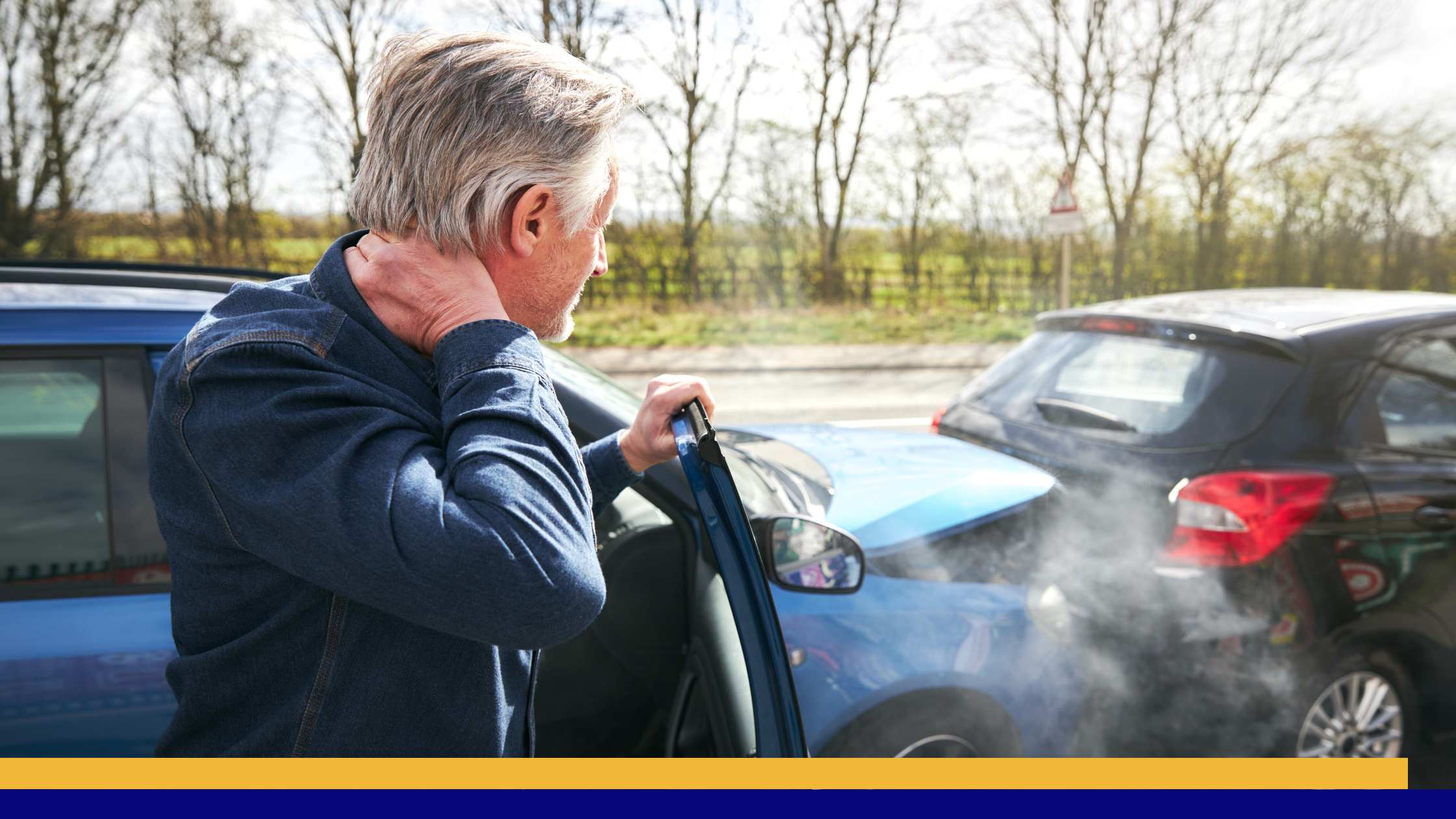
You were in a crash on Pacific Coast Highway or maybe on Jamboree Road, and the police showed up. An officer took statements, measured skid marks, and handed you a card with a case number. Now the insurance company is asking for a copy of the report, and you are wondering how much weight it actually carries.
More than most people realize. Insurance adjusters treat the police report as the foundation of their claim review. They read it before they call you, before they send an inspector, and before they decide how much to offer. What is in that document, what is left out, and what the officer’s narrative says about fault can push your claim higher or lower before you have had a single real conversation with a claims rep.
This article explains exactly what adjusters look for in a Newport Beach traffic collision report, how errors or one-sided narratives can hurt your case, and what you can do to protect yourself before the insurance company sets a number on your injuries.
Key Takeaways
- Police reports carry significant weight with insurance adjusters, but they are not the final word on fault or damages.
- Adjusters scan the report for the officer’s at-fault notation, contributing factors, citations issued, and any admission-like statements made at the scene.
- Errors and omissions in a police report are more common than most injured drivers expect, and they can usually be challenged or supplemented with additional evidence.
- California follows a pure comparative negligence rule, meaning even a partial fault finding in the report can reduce your compensation unless you build a counter-narrative with supporting evidence.
- You have two years from the date of the crash to file a personal injury lawsuit under CCP §335.1, but the fight with the insurer often starts within days of the accident.
- A Newport Beach car accident attorney can request corrections to the report, gather supplemental evidence, and push back on an adjuster’s interpretation before you accept any offer.
What a Newport Beach Police Report Actually Contains
When an officer responds to a crash in Newport Beach, the Newport Beach Police Department generates a traffic collision report on the California Highway Patrol 555 form or an equivalent local form. The document is more detailed than most drivers expect.
A standard California traffic collision report includes the date, time, and exact location of the crash; identification of every driver, passenger, and witness; vehicle descriptions and registration data; a diagram of the collision showing the vehicles’ positions and direction of travel; the officer’s narrative description of how the crash occurred; any contributing factors checked from a standard list (e.g., unsafe speed, improper turn, distracted driving, DUI); citations issued; and an “at-fault” or “primary collision factor” notation identifying which driver the officer believes caused the crash.
That at-fault notation is what adjusters zero in on first. It does not create legal liability, and it is not admissible in California courts as evidence of fault in a civil case, but adjusters use it as a starting point to frame the entire claim. If your name appears in that box, expect the insurer to open with a lowball offer or a partial-fault argument.
How Insurance Adjusters Read the Report
Most adjusters review a police report in under ten minutes. They work through a mental checklist, and knowing that checklist helps you understand what they will use against you.
The at-fault notation and primary collision factor. This is the first thing adjusters check. If the officer marked the other driver as the primary cause, the adjuster knows their insured has exposure. If the box is blank, ambiguous, or lists contributing factors for both drivers, the adjuster has more leverage to dispute your claim.
Statements attributed to each driver. Officers record what people say at the scene, often in paraphrase form. A driver who said “I didn’t see them coming” or “I was only going a little over the speed limit” may find those words reflected in the narrative. Adjusters treat scene statements as near-admissions. Even phrases that sound innocent can be used to argue you were distracted, speeding, or not paying attention.
Witness information and statements. A report that includes two independent witnesses who confirmed the other driver ran the red light is worth far more than a report with no witness section. Adjusters note whether witnesses exist, whether their accounts are consistent, and whether any witness statement contradicts yours.
Citations issued. If the officer cited the other driver for a traffic violation, that citation is a powerful data point in your favor. Adjusters know that a citation for running a red light or making an illegal turn creates legal exposure for their insured. Conversely, if you received a citation, expect the adjuster to use it as a lever to lower your settlement offer.
Injury notations. Officers typically note whether anyone complained of pain at the scene and whether paramedics were called. If the report says “no injuries reported” because you said you felt fine in the immediate aftermath of the crash, and you later develop whiplash or a disc injury, the adjuster will use that gap to question the seriousness of your injuries. Always tell the officer if you feel any pain, however minor it seems in the moment.
- Tip: Ask the responding officer directly whether an injury notation will be included in the report. If you feel pain anywhere, say so clearly at the scene. Adrenaline masks pain after crashes, and injuries that appear minor on scene often become serious within 24 to 72 hours.
Common Errors in Police Reports That Can Hurt Your Case
Police reports are prepared under pressure, often at the scene, and they contain errors more often than most people realize. Some errors are factual. Some are omissions. Others reflect a one-sided account when the officer spoke primarily with the at-fault driver.
Wrong driver marked at fault. If the officer relied on one driver’s account and did not wait for independent witnesses, the narrative may reflect an incomplete picture. This is especially common in multi-vehicle crashes on busy Newport Beach corridors like Coast Highway, MacArthur Boulevard, and Bristol Street.
Incorrect speeds, road conditions, or vehicle positions. The diagram section of the report may show vehicles in the wrong lanes, or the estimated speeds may not match what the evidence actually shows. Surveillance cameras, dashcam footage, and accident reconstruction can correct these errors.
Missing witness information. Officers sometimes note that witnesses were present but do not capture their full contact information. If you collected witness names and numbers at the scene, you can supply that information to an attorney who can follow up.
Omitted injury complaints. As noted above, if an officer does not include your pain complaints in the report, that gap becomes ammunition for the insurer. Medical records from an emergency room visit or urgent care appointment on the day of the crash can fill that gap.
You or your attorney can formally request an amendment to a California traffic collision report if it contains factual errors. The process is not automatic, and the agency has discretion over whether to accept the change, but documented evidence, a signed declaration, and a formal supplemental request can place the dispute on record. At minimum, your attorney can provide a written rebuttal that becomes part of the claim file.
- Tip: Obtain a copy of your police report as soon as it is released. In Newport Beach, reports are typically available through the Newport Beach Police Department records division within five to ten business days of the crash. Review it carefully before speaking with the other driver’s insurer.
California’s Pure Comparative Negligence Rule and What It Means for Your Claim
California follows a pure comparative negligence standard under established case law, which means the fault for a crash can be divided between drivers in any proportion. If an adjuster or jury finds you were 25 percent at fault, your total compensation is reduced by 25 percent. If they find you were 50 percent at fault, your recovery drops by half. There is no threshold that bars recovery, but every percentage point of fault assigned to you cuts into your damages.
This is why the police report matters so much. If the report contains language that suggests you were speeding, following too closely, or distracted, the adjuster will attempt to use that language to assign you a share of fault and reduce the settlement figure accordingly. Even a neutral or ambiguous report gives the adjuster room to argue partial fault.
Building a counter-narrative requires real evidence: traffic camera footage, vehicle black box data, photos from the scene, medical records that show the biomechanical force of the impact, and witness declarations. An experienced Newport Beach car accident attorney knows how to gather and present that evidence before the insurer sets an opening offer in stone.
If a government entity contributed to the crash (a malfunctioning traffic light, a dangerous road condition on a city street), the claim timeline shortens considerably. Government claims in California must be filed within six months of the incident under Government Code §945.4, which is a strict deadline that applies regardless of the two-year limit under CCP §335.1 for private-party injury claims.
What You Can Do Right Now to Protect the Value of Your Claim
You do not need to wait for a lawyer to start protecting yourself after a Newport Beach car accident. The steps you take in the first few days directly shape what the police report can and cannot do to your case.
Obtain your own copy of the report as soon as it is available and read it line by line. Compare the officer’s diagram to any photos you took at the scene. Note any statements attributed to you that seem inaccurate or out of context. Write down your own detailed account of the crash while it is fresh, including what the other driver said to you, the road conditions, the time, and the sequence of events.
Seek medical care immediately, even if you feel well. A same-day or next-day medical visit creates a record that links your injuries to the crash. That record supplements the police report’s injury notation and removes one of the adjuster’s most common tools for minimizing soft-tissue and delayed-onset injuries.
Do not give a recorded statement to the other driver’s insurance company without speaking to an attorney first. Adjusters are trained to ask questions in a way that produces answers that sound like admissions. They may call within 24 to 48 hours of the crash, sometimes before you have even had a chance to read the police report.
- Tip: You are not legally required to give a recorded statement to the opposing insurer. You have the right to tell them your attorney will be in contact. That single step can prevent a hasty statement from contradicting the police report in ways that are difficult to undo.
How Vetchtein Law Helps Newport Beach Accident Victims Respond to Police Report Issues
Attorney Robert Vetchtein has represented injured accident victims across Southern California since 2004. When a client comes to Vetchtein Law with a police report that misidentifies fault, contains errors, or was used by an adjuster to justify a lowball offer, the firm’s approach is methodical: gather the evidence that corrects the record, document it formally, and build a claim file that tells the full story.
The firm handles Newport Beach car accident cases from initial report review through settlement negotiation or litigation. Every client pays nothing out of pocket. Vetchtein Law operates on a contingency fee basis, which means there is no fee unless the case wins or settles. The firm also offers free initial case evaluations, available 24 hours a day, seven days a week.
With offices in Newport Beach, San Bernardino, and Riverside, the firm serves clients across Orange County and the wider Inland Empire. Catastrophic injury cases, including those involving serious and long-term injuries, are handled statewide.
If you believe the police report in your case is inaccurate, incomplete, or being used by an insurer to undervalue your injuries, speaking with an attorney before the claim gets further along is the most direct way to protect your recovery.
Frequently Asked Questions
Is the police report the final word on who was at fault in my Newport Beach car accident?
No. In California, a police report’s at-fault notation is not admissible in civil court as proof of liability. Adjusters and attorneys treat it as one data point among many. Physical evidence, witness testimony, surveillance footage, and expert accident reconstruction can all be used to challenge or supplement what the report says about fault.
What if the police report contains a mistake that makes the crash look like my fault?
You or your attorney can submit a formal request for amendment to the agency that prepared the report. Even if the agency declines to change it, your attorney can prepare a documented rebuttal with supporting evidence that becomes part of your claim file and any future litigation record.
How long do I have to file a car accident injury claim in California?
Under CCP §335.1, you generally have two years from the date of the crash to file a personal injury lawsuit. However, if a government entity is involved, for example if the city’s traffic signal was malfunctioning, you must file an administrative claim within six months under Government Code §945.4. Do not wait to find out which deadline applies to your situation.
Can an insurance adjuster use my statement from the police report against me?
Yes. Any statement attributed to you in the officer’s narrative, even an innocent-sounding one, can be used to argue you were partially at fault. Adjusters look for language that suggests you did not see the other vehicle in time, that you were going too fast, or that you were distracted. An attorney can help you contextualize those statements with supporting evidence.
Do I need a lawyer if the police report clearly shows the other driver was at fault?
Even a favorable report does not guarantee a fair settlement. Adjusters still look for ways to minimize injury claims, challenge the extent of your damages, and apply comparative fault. An attorney can maximize the value of a strong report and prevent the insurer from reframing it once medical bills, lost wages, and long-term care needs become clearer.
How do I get a copy of my Newport Beach police report?
Contact the Newport Beach Police Department’s records division directly. Reports are typically released five to ten business days after the crash, once the investigation is complete. You can request a copy in person at the department or through the records portal. Your attorney can also obtain it on your behalf.
If the police report from your Newport Beach accident contains errors, omissions, or language an adjuster is using to undervalue your injuries, do not wait for the insurer to set a number that is difficult to change. Vetchtein Law offers free case evaluations 24 hours a day, seven days a week, with no out-of-pocket cost and no fee unless we win. Call (888) 963-9999 or visit our contact page to speak with an experienced California personal injury attorney today. There is no fee unless we win.
Meet attorney Robert Vetchtein.
This article is for informational purposes only. It is not legal advice and does not create an attorney-client relationship. Laws and deadlines change, and every case is different, so speak with a qualified California attorney about your situation.