The doorbell camera you ordered on Cyber Monday sparks and starts a fire. The heavily discounted space heater you grabbed on Black Friday overheats while your family sleeps. The children’s toy rushed to market for the holiday season breaks apart and becomes a choking hazard. These are not fringe scenarios: the holiday shopping surge that runs from late November through December puts an enormous volume of new, often hastily manufactured or inadequately tested products into California homes every year.
If a defective product injured you or someone in your family during the holiday season, you have legal rights under California product liability law. Manufacturers, distributors, and retailers can all be held responsible for putting a dangerous product in your hands. The challenge is knowing what to do in the hours and days after the injury to protect your claim and your health.
This article explains how product defect injury claims work in California, what steps to take immediately after a holiday shopping injury, how California law assigns liability across the supply chain, and what to expect if you pursue a legal claim for your losses.
Key Takeaways
- California holds manufacturers, distributors, and retailers strictly liable for injuries caused by defective products: you do not have to prove the company was careless, only that the product was defective and caused your injury.
- Three types of defects can support a claim: a design defect, a manufacturing defect, or a failure to warn about known dangers.
- You have two years from the date of injury to file a personal injury lawsuit under California Code of Civil Procedure Section 335.1, but preserving evidence should begin immediately, not months later.
- Preserve the product, its packaging, the receipt or order confirmation, and all photos of your injuries and the scene. Do not repair, return, or discard the product.
- Injuries from holiday products often involve e-commerce sellers and overseas manufacturers, which can complicate the chain of liability: an attorney experienced in California product liability law can identify all responsible parties.
- Medical documentation is the backbone of a product liability claim. Seek treatment promptly and follow all discharge instructions.
- Free consultations with a California personal injury attorney cost you nothing and can tell you whether your claim is worth pursuing before you commit to anything.
What Makes a Product “Defective” Under California Law
California follows a strict liability standard for product defect cases. That means you do not need to prove that the company acted recklessly or even knew the product was dangerous. You need to show that the product was defective when it left the defendant’s control, that the defect caused your injury, and that you suffered actual harm.
California law recognizes three categories of defects. A design defect means the product’s blueprint was inherently unsafe: every unit manufactured to that specification poses the same danger. A manufacturing defect means the design was sound, but something went wrong during production for this particular unit. A failure to warn defect means the product carried a risk the manufacturer or seller knew about but did not adequately disclose on the label or in the instructions.
Holiday products, especially consumer electronics, toys, and small appliances sold at steep Black Friday and Cyber Monday discounts, generate a disproportionate number of product liability claims. The pressure to manufacture at high volume for the holiday season, meet aggressive pricing targets, and ship before peak dates can compress the quality-control and safety-testing timelines that keep products safe.
- Tip: If the Consumer Product Safety Commission (CPSC) has issued a recall on the product that injured you, that recall is powerful evidence in your claim. Check the CPSC recall database at cpsc.gov and screenshot any matching entry on the day you discover it, since recall listings can be updated or removed.
Step 1: Seek Medical Attention and Document Your Injuries
Your first priority after a product injury is your health. Even injuries that seem minor, a cut from a broken part, a mild burn from a defective appliance, eye irritation from a chemical release, can become serious without proper treatment. Go to an emergency room, urgent care, or your primary care physician as soon as possible and tell them exactly what happened and what product was involved.
Medical records created close to the date of the injury carry significant weight in a product liability claim. They establish that the injury occurred, describe its severity, and create a timeline that connects the defective product to your harm. If you wait days or weeks to seek treatment, the defense will argue that your injuries happened some other way or were minor enough to ignore.
Follow all treatment instructions, attend every follow-up appointment, and keep records of prescriptions, medical devices, and out-of-pocket costs. Your economic damages, medical bills, lost wages, future treatment costs, must be documented to be recovered.
- Tip: Keep a brief daily journal from the day of the injury forward. Note your pain levels, how the injury affects your ability to work and complete daily tasks, and any new symptoms. This record becomes evidence of your non-economic damages, including pain and suffering.
Step 2: Preserve the Product and All Related Evidence
The defective product itself is your most important piece of evidence. Do not attempt to repair it, return it to the retailer, or throw it away. Place it in a bag or box, handle it as little as possible, and store it somewhere safe. If the product caused a fire or other scene damage, photograph the scene thoroughly before anything is cleaned or repaired.
Preserve the original packaging, any instruction manuals or warning labels that came with the product, and all proof of purchase. If you bought the item online, save the order confirmation email, the product listing page (take a screenshot immediately: listings can be edited), and any shipping notifications. If the product was a gift, ask the giver for the receipt or order confirmation.
Photograph your injuries from multiple angles on the day they occur and again over the following days as they evolve. If there were witnesses, family members who saw the product fail, neighbors who helped you, bystanders at a retail location, get their names and contact information while the events are fresh.
- Tip: If the product contained a serial number or batch code, photograph it before the product is taken by any party for inspection. That code can help trace the exact manufacturing date and production run, which is critical for identifying a manufacturing defect affecting a subset of units.
Step 3: Report the Defect to the Appropriate Agencies
Reporting a defective product protects other consumers and creates an official record that supports your claim. File a report with the U.S. Consumer Product Safety Commission at SaferProducts.gov. If the product was a vehicle component, report it to the National Highway Traffic Safety Administration (NHTSA). If the product was a food item or dietary supplement, the FDA accepts reports at their MedWatch portal.
These reports are public record and can be used as evidence in your case. They also prompt agency investigations that may lead to recalls, which in turn generate additional evidence of the defect’s widespread nature. A recall issued after your injury does not automatically resolve your claim, you still need to pursue compensation separately, but it removes any doubt that the product was unsafe.
Notify the retailer in writing as well, but do so carefully. A brief written notice that you were injured by a product purchased from them, sent by email so you have a timestamp, creates a record without giving the company ammunition to use against you. Do not make detailed statements about what happened until you have spoken with an attorney.
Step 4: Understand Who Is Liable in a California Product Liability Claim
California’s product liability law holds every party in the commercial chain of distribution potentially responsible for a defective product injury. That chain includes the product’s original designer, the manufacturer, any component part suppliers, importers, distributors, and the retailer who sold the product to you, whether that retailer is a big-box store, an e-commerce marketplace, or a third-party seller on a platform like Amazon.
This matters enormously for holiday shopping injuries because a significant portion of discounted Black Friday and Cyber Monday products are manufactured overseas, often by companies with no U.S. presence. When the foreign manufacturer is unreachable, California law allows injured plaintiffs to pursue the importer, the domestic distributor, or the retailer who put the product in your hands. An attorney familiar with California product liability litigation can identify the entire chain and name every viable defendant.
California also applies pure comparative negligence, meaning that even if you were partly at fault, for example, if you used a product outside its intended purpose, your compensation is reduced by your percentage of fault, not eliminated entirely. The defense will often argue comparative fault to reduce their exposure. An experienced attorney anticipates this and builds the case to minimize that argument.
- Tip: Third-party sellers on online marketplaces have been the subject of significant California litigation in recent years. California courts have held in several cases that the marketplace itself can bear liability when it controls the fulfillment and payment process. Do not assume the overseas seller is the only party with exposure.
Step 5: Know the Filing Deadline for Your Claim
California Code of Civil Procedure Section 335.1 gives injured plaintiffs two years from the date of injury to file a personal injury lawsuit. Miss that deadline, and the court will almost certainly dismiss your claim regardless of its merits.
Two years may feel like a long runway, but product liability cases require early action. Physical evidence degrades. Witnesses’ memories fade. Manufacturers may issue software patches, design updates, or revised labeling that obscures the original defect. Corporate records get purged on regular destruction schedules. An attorney who gets involved early can send litigation hold letters, preserve electronically stored information, and retain expert witnesses while the evidence is intact.
If your injury involves a defective product sold by or through a government agency, a transit vehicle, a piece of public school equipment, or a product distributed by a government program, Government Code Section 945.4 requires you to file a government claim within six months of the incident before you can sue. This deadline is separate from and much shorter than the general statute of limitations.
Why Hiring the Right Attorney Matters for Your Product Defect Injury Case
Product liability cases are among the most technically demanding personal injury claims. They require expert testimony from engineers and safety specialists, discovery into corporate design and testing records, and often litigation against well-funded defendants with experienced defense teams. The attorney you hire to handle your claim needs both the resources to build that case and the experience to know when a settlement offer is fair.
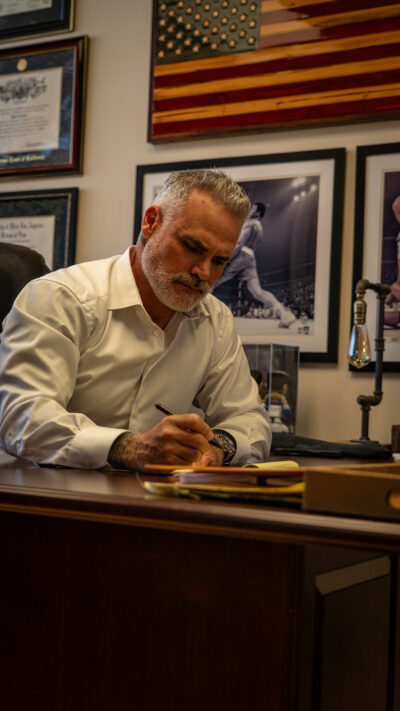
Robert Vetchtein has represented injured Californians in personal injury claims since 2004. His practice serves clients throughout Southern California, including San Bernardino, Riverside, Fontana, Newport Beach, and the broader Inland Empire and Orange County regions. If you were injured by a defective holiday product anywhere in Southern California, his office is available 24 hours a day, seven days a week to answer your questions.
Vetchtein Law handles product liability cases on a contingency fee basis. You pay no attorney fees unless your case results in a settlement or verdict in your favor. There is no financial risk in scheduling a free initial case evaluation to find out where you stand.
When you call, have the product, your purchase documentation, your medical records, and your photographs ready to discuss. The earlier you reach out, the more options you have for preserving evidence and building a strong claim.
Frequently Asked Questions
Can I sue the retailer who sold me a defective product, or only the manufacturer?
Yes. California product liability law allows you to pursue any party in the commercial distribution chain, including the retailer. If you bought a product at a big-box store or through an online marketplace and the product injured you, the retailer may share liability along with the manufacturer, importer, and distributor. Your attorney will identify all parties whose conduct contributed to putting a defective product in your hands.
What if the product that injured me has already been recalled?
A recall actually strengthens your claim because it is official acknowledgment that the product was unsafe. However, a recall does not automatically provide compensation: you still need to file a separate claim for your injuries, medical bills, lost wages, and other losses. Contact a personal injury attorney to pursue recovery; the recall documentation will be useful evidence in your case.
What if I partially caused the injury by using the product in a way the instructions didn’t intend?
California follows a pure comparative negligence rule, meaning your compensation is reduced by the percentage of fault attributed to you, but it is not eliminated. If a jury finds you were 20 percent at fault and your total damages are $100,000, you recover $80,000. The defense will often try to maximize the fault percentage assigned to the injured person, which is one reason having an experienced attorney to counter that argument matters.
How long does a product liability case take to resolve in California?
It varies significantly. Straightforward cases with clear liability and documented injuries may resolve in settlement within several months. Cases involving complex technical issues, multiple defendants, or disputed causation can take a year or more. An attorney familiar with California product liability litigation can give you a realistic assessment based on the facts of your specific case after reviewing the evidence.
What if I threw away the defective product before I knew I had a claim?
The loss of the product makes the case harder but does not necessarily end it. Other forms of evidence, photographs taken before disposal, repair records, witness accounts, purchasing records, CPSC complaint data about the same product model, can support your claim. Contact an attorney as soon as possible so they can evaluate what evidence remains available and advise you on next steps.
Does it matter that I bought the product at a Black Friday or Cyber Monday sale at a discounted price?
No. The sale price has no effect on the manufacturer’s, distributor’s, or retailer’s duty to put a safe product on the market. A product sold at 60 percent off must meet the same safety standards as the same product sold at full price. If the product was defective and caused your injury, you have the same legal rights regardless of what you paid for it.
If you or someone in your family was injured by a defective product purchased during the holiday shopping season, Vetchtein Law is ready to evaluate your case at no cost to you. Call (888) 963-9999, available 24 hours a day, seven days a week, or visit our contact page to schedule your free consultation. Robert Vetchtein has fought for injured Californians since 2004, and his office serves clients across San Bernardino, Riverside, Fontana, Newport Beach, the Inland Empire, and Orange County. There is no fee unless we win.
Meet attorney Robert Vetchtein.
This article is for informational purposes only. It is not legal advice and does not create an attorney-client relationship. Laws and deadlines change, and every case is different, so speak with a qualified California attorney about your situation.