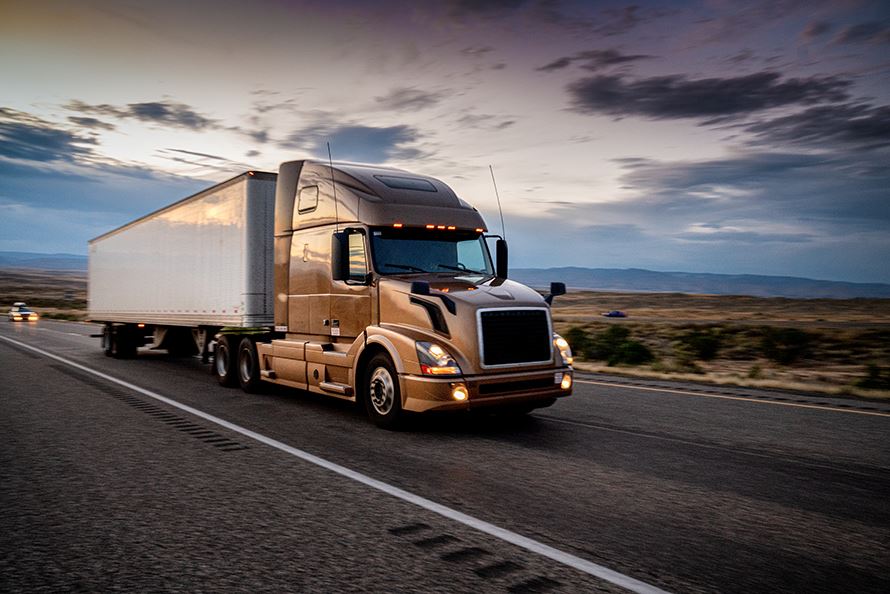
You were hit by an 18-wheeler, a delivery truck, or a semi hauling freight. The collision may look similar to any other crash on the freeway: crumpled metal, an ambulance, a police report filed at the scene. But the legal case that follows is a fundamentally different animal than a standard car accident claim, and treating it like one is one of the most common mistakes injured Californians make.
Trucking cases involve a web of federal regulations, multiple potential defendants, and insurance policies with limits that dwarf anything attached to a personal vehicle. The injuries are also typically more severe, which means the stakes of getting your claim right are that much higher. If you or someone you love was hurt in a crash involving a commercial truck, understanding those differences before you take any legal step could be the single most important thing you do.
This article walks through the key ways truck accident claims diverge from standard car accident cases in California, from who can be held responsible to what evidence you need to preserve and why the clock on your case may run faster than you think.
Key Takeaways
- Truck accident claims can involve multiple defendants, the driver, the trucking company, a cargo loader, a maintenance contractor, or the truck manufacturer, while car accident claims typically involve only other drivers.
- Federal Motor Carrier Safety Administration (FMCSA) regulations govern commercial trucking and create an additional layer of legal standards that do not apply to ordinary car accidents.
- Commercial trucks carry much higher insurance policy limits, which changes both what you can recover and how aggressively insurers will fight your claim.
- Critical evidence in truck cases, electronic logging device (ELD) data, black box records, driver qualification files, can be destroyed quickly if you do not act to preserve it.
- California’s pure comparative negligence rule applies to both types of claims, but trucking companies often have sophisticated legal teams working to shift fault to you from day one.
- The two-year statute of limitations under California Code of Civil Procedure § 335.1 applies to both, but certain defendants may trigger shorter deadlines.
- Working with an experienced truck accident lawyer in California, not a general personal injury attorney, can make a measurable difference in your outcome.
Who Can Be Held Responsible
In a standard car accident, liability usually comes down to two or three parties: the other driver, possibly a vehicle owner if the driver was borrowing the car, and in rare cases a government entity if a road defect contributed to the crash.
Truck accident cases routinely involve far more potential defendants. The truck driver is obviously one, but the trucking company that employed or contracted them often shares liability, sometimes more so. Under a legal doctrine called respondeat superior, employers can be held responsible for the negligent acts of their employees committed during the course of employment. But trucking companies also have independent duties: they must screen drivers, enforce hours-of-service rules, maintain their fleet, and ensure cargo is loaded correctly.
Beyond the carrier and driver, other parties may bear responsibility depending on the circumstances. If faulty brakes, a defective tire, or a mechanical failure contributed to the crash, the truck’s manufacturer or a maintenance company could be liable. If improperly secured cargo shifted and caused the driver to lose control, the company that loaded or secured the freight may be on the hook. Freight brokers and shippers have faced liability in some cases as well.
This multi-defendant structure matters enormously for your recovery. More liable parties can mean more insurance coverage available, but it also means more defense teams working against your claim from the moment the crash occurs. Identifying every responsible party, and doing so before evidence disappears, requires a thorough investigation that goes well beyond what is needed in a typical two-car collision.
- Tip: Never assume the trucking company’s insurer is on your side. Their adjusters are trained to close claims quickly and cheaply. The first call they make to you is part of a strategy, not a courtesy.
Federal Regulations Create a Parallel Set of Standards
Car accident cases are governed almost entirely by California traffic laws and general negligence principles. Truck accident cases add an entire federal regulatory framework on top of that.
The FMCSA sets mandatory rules for commercial motor vehicle operators, and violations of those rules are powerful evidence of negligence. Hours-of-service regulations limit how long a driver can operate a truck before taking mandatory rest breaks, and driver fatigue is a factor in a significant share of serious trucking crashes. Drug and alcohol testing requirements, minimum medical certification standards, vehicle inspection obligations, and weight limits are all federally mandated.
When a trucking company or driver violated an FMCSA regulation and that violation contributed to your crash, it can establish negligence per se, meaning the violation itself is treated as proof of negligence rather than just one piece of circumstantial evidence. That is a significant legal advantage that simply does not exist in ordinary car accident cases.
California also has its own commercial vehicle laws. The California Vehicle Code imposes requirements on carriers operating within the state, and violations of those standards carry similar legal weight. A truck accident attorney familiar with both the federal and California regulatory landscape can identify violations that a generalist might overlook entirely.
- Tip: Ask whether the truck involved in your crash was subject to a prior FMCSA safety audit or had a history of out-of-service orders. That information is publicly available and can reveal a pattern of negligence by the carrier.
The Insurance Picture Is Completely Different
The minimum liability insurance for a private passenger vehicle in California is $30,000 per person and $60,000 per accident: already inadequate for a serious injury case. Commercial trucking operations are required to carry far higher minimums. Under federal law, carriers transporting general freight must carry at least $750,000 in liability coverage, and carriers moving certain hazardous materials must carry $1 million to $5 million or more.
This changes your case in two important ways. First, there is more coverage available to compensate your medical bills, lost wages, pain and suffering, and other losses, which matters most when injuries are catastrophic. Second, those larger policy limits come with larger, more aggressive insurance defense operations. You are not negotiating with a small regional insurer over a fender bender. You are dealing with national carriers that employ teams of attorneys and adjusters whose full-time job is minimizing payouts on exactly the type of claim you are making.
Beyond the primary carrier policy, commercial trucking operations often have layered coverage: multiple policies stacked across the owner, the lessee, and sometimes the freight broker. Identifying and accessing all available coverage requires knowing where to look and how to make claims across multiple policies simultaneously.
Evidence That Disappears Fast
A car accident generates a police report, photos from the scene, and witness statements. That is usually sufficient evidence to work with. A truck accident generates all of that and more, but the additional evidence can vanish within days if you do not act to preserve it.
Commercial trucks operating under FMCSA authority are required to use electronic logging devices (ELDs) that record hours of service, speed, and other driving data. Event data recorders, the truck’s equivalent of an airplane black box, capture pre-crash speed, braking inputs, and other critical information. Driver qualification files contain records of training, licensing, prior violations, and drug testing history. Trucking companies maintain maintenance logs, inspection records, and cargo documentation.
Federal regulations require some of this data to be kept for specific periods, but those periods are often short, and in the absence of a legal hold notice, companies may overwrite or discard data in the ordinary course of business. In California, your attorney can send a spoliation letter, a formal notice demanding that the defendant preserve all potentially relevant evidence, very shortly after the crash. If the company destroys evidence after receiving that notice, it can result in sanctions and adverse jury instructions at trial.
The window to take these steps is short. A truck accident attorney should be retained quickly after the crash, not after you have spent weeks negotiating with the insurance company and the critical data is gone.
- Tip: If possible, photograph the truck’s unit number, the carrier’s name on the cab, and any DOT identification numbers before leaving the scene. This information helps your attorney identify the correct corporate entity immediately and send the right preservation notice.
How Fault Is Determined and Contested
California uses a pure comparative negligence system under Civil Code principles established through case law and affirmed repeatedly by California courts. That means you can recover damages even if you were partially at fault for the crash: your recovery is simply reduced by your percentage of fault. If a jury finds you 20% at fault and awards $500,000, you recover $400,000.
That rule applies to both car and truck accident cases. The difference is how aggressively fault is contested in truck cases. Trucking companies and their insurers invest heavily in accident reconstruction experts, data analysts, and attorneys who specialize in building arguments that the injured person contributed to the crash. The higher the potential payout, the more resources the defense commits to reducing it.
In practice, this means your own documentation from the scene, medical records showing your injuries, and testimony from independent witnesses carry more weight in a truck case than they might in a minor fender bender. An experienced truck accident lawyer in California knows how to counter these tactics and build a case that resists the defendant’s attempt to shift blame.
Statute of Limitations and Government Defendants
Under California Code of Civil Procedure § 335.1, you have two years from the date of injury to file a personal injury lawsuit. That deadline applies to both car and truck accident cases. Missing it generally means losing your right to recover anything, regardless of how strong your case is.
However, truck accidents sometimes involve government defendants: a public agency that negligently maintained the road, a government-contracted carrier, or a municipal trucking operation. If any defendant is a government entity, California Government Code § 945.4 requires that you file a government tort claim within six months of the incident before you can sue. Six months passes quickly, especially when you are recovering from serious injuries and focused on medical treatment.
There are also practical reasons not to wait even close to the two-year limit. The longer you wait, the more evidence degrades, the harder witnesses are to locate, and the stronger the implication that your injuries were not as serious as claimed. Starting the process early is not just legally advisable: it is strategically necessary.
How Vetchtein Law Handles Truck Accident Cases
Robert Vetchtein has represented injured Californians in serious accident cases since 2004. Truck accident claims are among the most demanding personal injury cases that exist: they require understanding of federal transportation law, immediate investigative action to preserve evidence, and the experience to stand up to well-funded corporate defendants and their insurers.
At Vetchtein Law, we represent truck accident victims on a contingency fee basis. There is no fee unless we win. You pay nothing out of pocket to retain an attorney and begin building your case. We offer free initial case evaluations 24 hours a day, seven days a week, because we understand that the questions you have after a serious crash do not follow business hours.
We serve clients throughout Southern California, including San Bernardino, Riverside, Newport Beach, Fontana, the broader Inland Empire, and Orange County. If you were injured in a commercial truck accident anywhere in California, we want to hear from you.
Learn more about how we handle truck accident cases or reach out today for a free evaluation.
Frequently Asked Questions
How is a truck accident case different from a regular car accident case in California?
Truck accident cases involve federal regulations, multiple potential defendants beyond just the driver, and much higher insurance policy limits. The evidence is different, ELD data, black box records, and carrier compliance files all become part of the investigation. And the defense resources on the other side are typically far greater than in a standard car accident claim.
Who can I sue after a truck accident in California?
Depending on the circumstances, you may have claims against the truck driver, the trucking company, a cargo loading company, a truck manufacturer, a maintenance contractor, or a freight broker. California law allows you to pursue all responsible parties, and identifying every one of them is a critical early step in your case.
How long do I have to file a truck accident lawsuit in California?
The general deadline under CCP § 335.1 is two years from the date of your injury. If any defendant is a government entity, a separate six-month deadline under Government Code § 945.4 applies for filing an administrative claim first. Acting quickly also protects critical evidence from being lost or destroyed.
What evidence is most important in a California truck accident case?
Electronic logging device data, event data recorder information, driver qualification files, maintenance records, inspection logs, cargo documentation, and the police report are all important. Much of this evidence can be lost or overwritten quickly, so contacting an attorney as soon as possible after the crash is critical.
Can the trucking company’s insurer contact me directly?
Yes, and they likely will. You are not required to give a recorded statement to any insurance company other than your own, and doing so without legal counsel can seriously harm your claim. Politely decline and contact a California truck accident attorney before speaking with anyone representing the other side.
What if I was partly at fault for the truck accident?
California’s pure comparative negligence rule allows you to recover damages even if you were partially at fault. Your recovery is reduced by your percentage of fault, but you are not barred from recovery entirely. Trucking companies will often try to inflate your share of the blame to reduce their payout: an experienced attorney can push back on that effectively.
If you were hurt in a collision with a commercial truck in California, the decisions you make in the first days and weeks after the crash can shape the outcome of your case. Vetchtein Law is available around the clock to answer your questions and evaluate your claim at no cost to you.
Call us 24/7 at (888) 963-9999 or visit our contact page to get started. There is no fee unless we win.
Learn more about our Riverside truck accident attorneys and Newport Beach truck accident attorneys, or meet attorney Robert Vetchtein.
This article is for informational purposes only. It is not legal advice and does not create an attorney-client relationship. Laws and deadlines change, and every case is different, so speak with a qualified California attorney about your situation.