The 91 freeway. Interstate 10 through Fontana. The 60 near Moreno Valley. If you spend any time driving in the Inland Empire, you already know how fast traffic can shift from moving to stopped. What you may not expect is a driver in the next lane glancing down at a text message at 65 miles per hour, then slamming into you before you have any time to react.
When that happens, you are suddenly facing medical bills, a damaged vehicle, lost income, and an insurance claim that moves far more slowly than your injuries need it to. The driver who hit you may deny being on their phone. Their insurer will look for any reason to limit what they owe you. And the clock on your legal rights under California law is already running.
This article explains how California handles distracted driving accident claims in 2026, what you need to know about proving fault in the Inland Empire, and what steps put you in the strongest position to recover full compensation.
Key Takeaways
- California law prohibits handheld phone use while driving under Vehicle Code §§ 23123 and 23123.5. A violation can be powerful evidence of negligence in your claim.
- Distracted driving includes more than phones. Eating, adjusting a GPS, reaching for objects, and extended conversations with passengers all count.
- California follows pure comparative negligence, meaning you can recover compensation even if you were partially at fault. Your award is reduced by your percentage of fault, not eliminated.
- Under CCP §335.1, you have two years from the date of the accident to file a personal injury lawsuit in California. Missing this deadline typically eliminates your right to sue.
- Cell phone records, witness statements, traffic camera footage, and event data recorder information can all help establish that the other driver was distracted at the time of the crash.
- Insurance adjusters for the at-fault driver’s carrier are not on your side. Their first offer is rarely close to the full value of your claim.
- An experienced distracted driving accident lawyer in the Inland Empire can investigate the crash, preserve critical evidence, and handle insurer negotiations while you focus on recovering.
What California Law Says About Distracted Driving
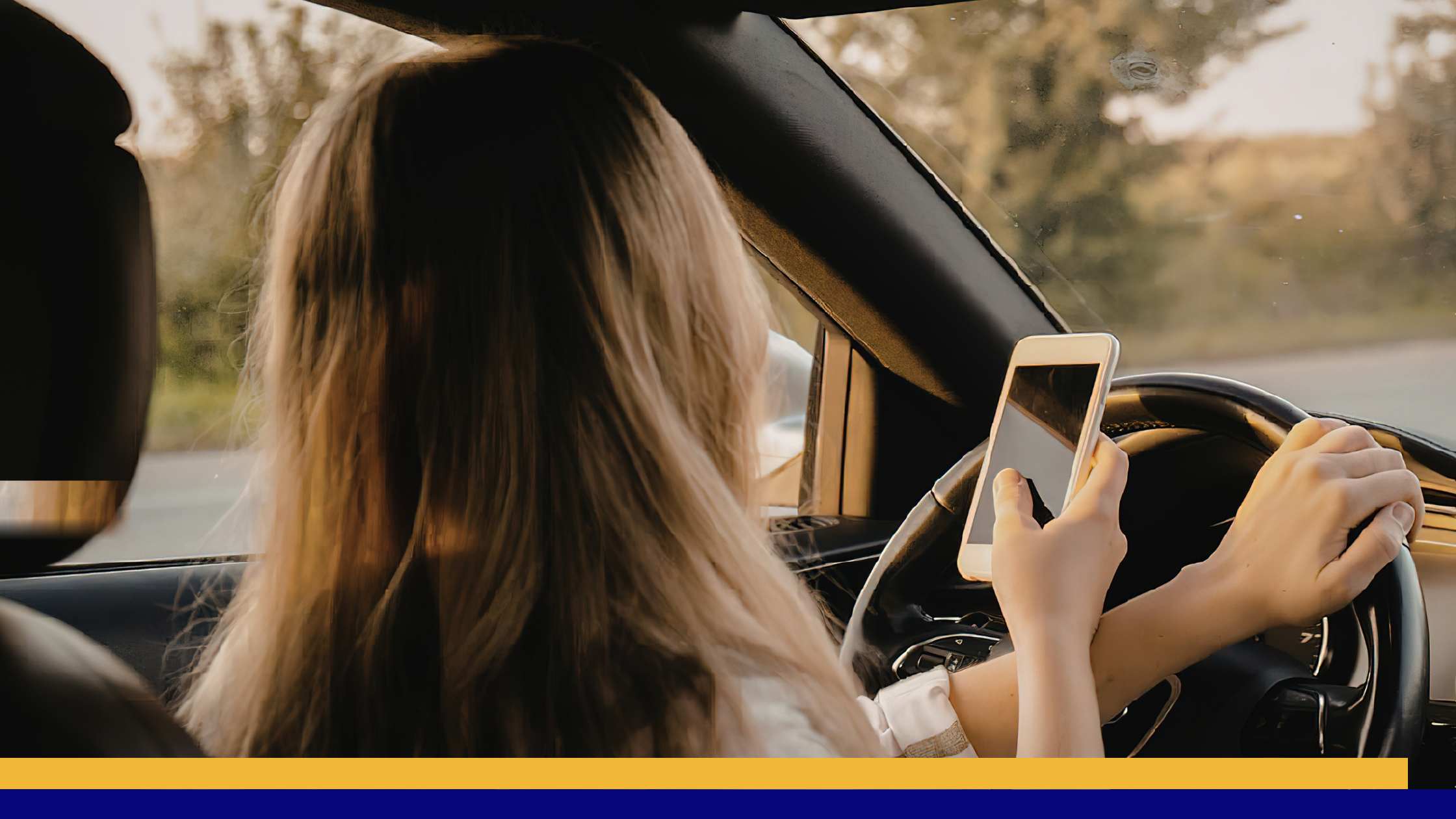
California has some of the most specific handheld device restrictions in the country. Under Vehicle Code §23123, it is illegal to drive while holding or operating a wireless telephone. Vehicle Code §23123.5 extends that prohibition to texting and any other handheld device use while driving. Drivers under 18 face a complete ban on hands-free devices as well, under Vehicle Code §23124.
A citation for any of these violations is not automatically proof of liability in a civil case, but it is significant evidence. If a responding California Highway Patrol officer, a San Bernardino County Sheriff’s deputy, or a Riverside County officer cited the other driver for phone use at the scene, that citation supports your claim directly.
Beyond phones, California courts recognize a broad range of distracted driving behaviors. Eating, applying makeup, adjusting an in-dash GPS, reading a paper map, reaching for something in the back seat, or even rubbernecking at another accident can all form the basis of a negligence claim. The legal question is whether the driver failed to exercise reasonable care and whether that failure caused your injuries.
- Tip: If you were able to do so safely at the scene, photograph the other driver’s phone in their lap or hand, or note whether they appeared to be looking down just before impact. These observations become part of your statement to police and your attorney.
Proving the Other Driver Was Distracted
Proving distracted driving is not always straightforward. Drivers rarely admit to it, and a crash happens in a fraction of a second. Building a solid liability case often requires several types of evidence working together.
Cell phone records. Your attorney can subpoena the at-fault driver’s phone records to show whether they were actively using their device at the time of the crash. Courts in California routinely permit this discovery in personal injury cases.
Traffic and surveillance camera footage. The Inland Empire’s major corridors, including the 10, 15, 60, 91, and 210 freeways, as well as many surface streets in San Bernardino and Riverside, are covered by Caltrans and local traffic cameras. Private businesses along the route may also have footage. This evidence disappears quickly. Many camera systems overwrite recordings within 24 to 72 hours unless someone requests preservation immediately.
Eyewitness accounts. Other drivers or pedestrians who saw the at-fault vehicle drifting, braking late, or swerving before impact can corroborate your account of what happened. Their contact information is worth collecting at the scene if conditions allow.
Accident reconstruction. For serious crashes involving significant injury, a professional reconstructionist can analyze skid marks, the angle of impact, airbag deployment data, and event data recorder (EDR) information from both vehicles to establish pre-crash behavior. The EDR in modern vehicles often records speed, braking, and steering inputs in the seconds before a collision.
- Tip: Send a written preservation demand to the at-fault driver’s insurance carrier within days of the accident. This puts them on notice to retain video footage, telematics data, and any other evidence in their possession. An attorney can prepare and send this letter on your behalf immediately after you retain them.
California’s Comparative Negligence Rule and Your Claim
California follows pure comparative negligence. Under this doctrine, a court can assign a percentage of fault to every party involved in a crash, including the injured plaintiff. Your total compensation is then reduced by your own share of fault.
What this means in practice is that even if an insurer argues you were partly responsible for the collision, whether because of your speed, your following distance, or your lane position, you can still recover damages for the portion of fault that belongs to the distracted driver. A claim where you are found 20 percent at fault does not disappear. Your recoverable damages are reduced by that 20 percent.
This rule works in your favor when liability is clear. It works against you when an insurer inflates your share of fault to justify a lower payout. Insurance adjusters in the Inland Empire are experienced at using comparative fault arguments to reduce settlement offers. A qualified distracted driving accident lawyer can push back with the evidence that accurately reflects the actual allocation of responsibility.
Injuries Common in Distracted Driving Crashes
Distracted driving accidents frequently involve full-speed or near-full-speed rear-end collisions, T-bone impacts at intersections, and sideswipe crashes on high-speed freeways. The injuries these collisions produce are often serious and sometimes permanent.
Whiplash and cervical spine injuries are among the most common results of rear-end impacts. Many victims experience delayed onset, meaning pain and stiffness may not fully develop until 24 to 72 hours after the crash. Traumatic brain injury, including concussion and more severe forms of TBI, can occur even without a direct head impact if the force of the collision causes the brain to move against the interior of the skull. Broken bones, torn ligaments, herniated discs, and internal injuries are also well-documented outcomes of high-speed collisions.
The Inland Empire’s network of high-speed freeways means many distracted driving accidents occur at highway speeds. A driver merging at 70 miles per hour while looking at their phone who clips your vehicle can cause injuries that require surgery, extended rehabilitation, and months away from work. The economic and non-economic impact of these injuries often far exceeds what a first insurance offer reflects.
- Tip: See a doctor the same day as your accident, even if you feel fine. Delayed treatment gaps give insurance adjusters a basis to argue that your injuries were not caused by the crash or were not serious. A same-day visit to an emergency room or urgent care clinic creates a contemporaneous medical record tied directly to the collision.
What California’s Statute of Limitations Means for Your Case
Under California Code of Civil Procedure §335.1, you have two years from the date of your distracted driving accident to file a personal injury lawsuit. Two years may seem like significant runway, but the investigation, evidence preservation, and medical documentation needed to build a strong claim all take time. Waiting also creates risk that camera footage has been overwritten, witnesses have moved on, and the details of the crash have faded.
There are important exceptions that shorten the deadline in some cases. If a government entity was responsible for the at-fault vehicle, such as a city bus, a county maintenance truck, a school district van, or any other publicly owned vehicle, the timeline compresses sharply. Under Government Code §945.4, you must file a formal government tort claim within six months of the accident or lose your right to sue. If you were struck by a government vehicle anywhere in San Bernardino County, Riverside County, or any Inland Empire city, this shortened deadline applies and requires prompt action.
Minors and individuals who were legally incapacitated at the time of the injury may have different tolling provisions under California law. An attorney can evaluate which rule applies to your specific situation.
How Vetchtein Law Helps Inland Empire Distracted Driving Accident Victims
Robert Vetchtein has represented personal injury victims across Southern California since 2004. Vetchtein Law is a full-service plaintiff-side personal injury firm with offices in San Bernardino, Riverside, and Newport Beach, serving clients throughout the Inland Empire including Fontana, Rancho Cucamonga, Ontario, Colton, Rialto, Moreno Valley, Corona, Murrieta, Temecula, and Perris.
When you are managing injuries, vehicle repairs, time away from work, and an insurance company that responds slowly and offers less than your claim is worth, legal representation can feel like one more demand on your energy. Vetchtein Law takes on the investigation, the evidence requests, the insurer negotiations, and the litigation if a fair settlement cannot be reached, so your attention stays on your recovery.
The firm operates on a contingency fee basis, with no upfront cost and no hourly billing. Vetchtein Law collects a fee only if it recovers compensation for you. There is no financial barrier to getting experienced representation, and no out-of-pocket expenses while your case is pending.
If you were injured by a distracted driver in the Inland Empire, a San Bernardino car accident attorney or Riverside car accident attorney at Vetchtein Law can review your case at no charge. The firm is available 24 hours a day, seven days a week. You can also learn more about the firm’s approach to personal injury cases by visiting the attorney profile page.
Frequently Asked Questions
What should I do immediately after a distracted driving accident in the Inland Empire? Call 911 so law enforcement responds and creates an official report. Seek medical attention the same day, even if your injuries seem minor. Photograph the scene, both vehicles, the positions of the cars, and any visible injuries. Do not give a recorded statement to the other driver’s insurance company before speaking with an attorney. Contact Vetchtein Law at (888) 963-9999 for a free case evaluation.
How do I prove the other driver was on their phone when they hit me?
Your attorney can request the at-fault driver’s cell phone records through the discovery process, which California courts regularly permit in personal injury cases. Surveillance and traffic camera footage, eyewitness testimony, and the responding officer’s observations and citations all contribute to the evidence record. Accident reconstruction experts can also analyze EDR data and physical evidence from the crash to establish pre-collision behavior.
Can I recover compensation if I was partly at fault for the accident?
Yes. California follows pure comparative negligence. Your total compensation is reduced by your share of the fault, but you can still recover for the portion caused by the other driver’s distraction. An insurer claiming you were significantly at fault is a negotiating position, not a legal determination. A qualified attorney can challenge those assessments with the actual evidence from your crash.
What is the deadline to file a distracted driving accident lawsuit in California?
Under CCP §335.1, the general statute of limitations is two years from the date of your accident. If a government vehicle was involved, you have only six months to file a formal government tort claim under Government Code §945.4. Missing either deadline typically bars your claim entirely. Consult with an attorney promptly after any serious crash so your options remain open.
What types of compensation can I recover after a distracted driving crash?
California personal injury claims can include compensation for past and future medical expenses, lost wages and reduced earning capacity, pain and suffering, emotional distress, and property damage. The specific categories and amounts available depend on the facts of your case, the severity of your injuries, and the insurance coverage in play. Vetchtein Law can assess what your claim may include during a free initial case evaluation.
How much does it cost to hire a distracted driving accident lawyer in the Inland Empire? Vetchtein Law handles distracted driving and car accident cases on a pure contingency fee basis. You pay nothing upfront, and the firm only collects a fee if it recovers money on your behalf. There are no out-of-pocket legal costs while your case is pending. Call (888) 963-9999 to schedule your free case evaluation at any time.
If a distracted driver injured you on an Inland Empire freeway or surface street, the time to act is now. Camera footage gets overwritten, evidence disappears, and California’s statute of limitations runs regardless of how long your recovery takes. Vetchtein Law offers free case evaluations, 24/7 availability, and contingency-only representation for distracted driving accident victims throughout San Bernardino County, Riverside County, and the wider Inland Empire. There is no fee unless we win. Call (888) 963-9999 or visit our contact page to speak with our team today.
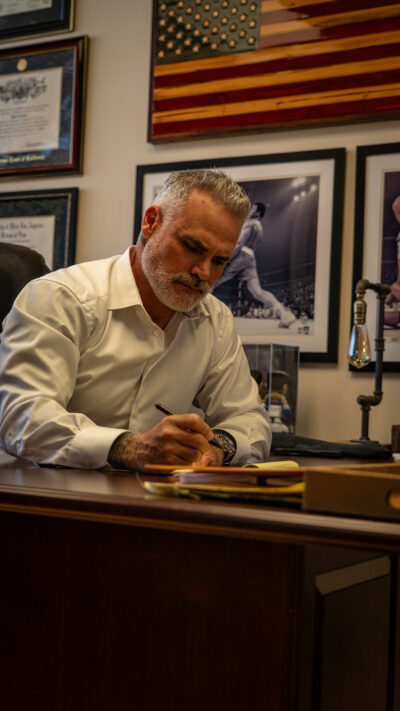
Meet attorney Robert Vetchtein.
This article is for informational purposes only. It is not legal advice and does not create an attorney-client relationship. Laws and deadlines change, and every case is different, so speak with a qualified California attorney about your situation.