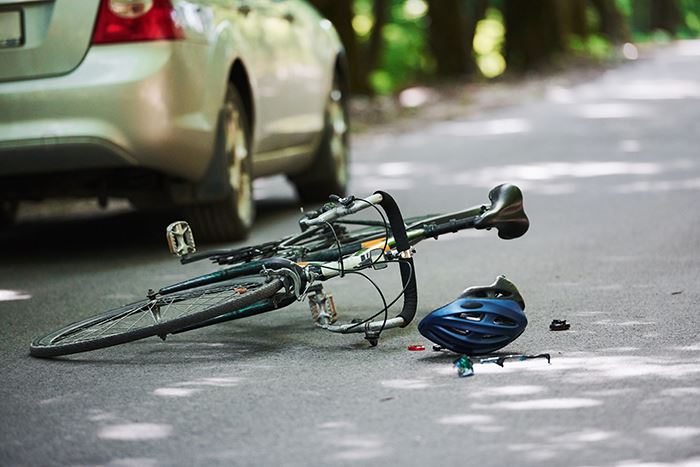
You were riding in the bike lane, following the rules, when a car drifted into your path and changed everything. Now you are dealing with injuries, a damaged bike, missed work, and a driver or insurance company that may already be pushing back on your claim. California law gives cyclists real, enforceable rights on the road, but those rights do not protect themselves. You have to act quickly, and you have to act correctly.
Bicycle accidents are not minor fender-benders. When a car strikes a cyclist, the human body absorbs the impact. Broken bones, traumatic brain injuries, road rash, spinal damage, and internal injuries are all common outcomes. The medical bills pile up fast, and the insurance process can feel designed to wear you down before you ever see a fair settlement.
This article walks through what California law says about bicycle lanes, what drivers are legally required to do, what your rights are after a crash, and how to build the strongest possible case for compensation.
Key Takeaways
- California Vehicle Code requires drivers to yield to cyclists in marked bike lanes and prohibits motor vehicles from blocking or traveling in those lanes except when legally required to cross them.
- You have two years from the date of your accident to file a personal injury lawsuit under California Code of Civil Procedure Section 335.1. If a government entity is involved, you have only six months to file an administrative claim under Government Code Section 945.4.
- California’s pure comparative negligence system means you can still recover compensation even if you were partially at fault for the crash. Your award is simply reduced by your percentage of fault.
- Helmets are required by law for riders under 18. Adults who ride without a helmet may have their damages reduced if the absence of a helmet contributed to their head injuries, though it does not eliminate their right to sue.
- Drivers who open car doors into a cyclist’s path, fail to yield when turning, or pass unsafely can be held liable even when the crash occurs outside a marked bike lane.
- Evidence disappears fast. Witness memories fade, skid marks wash away, and surveillance footage gets overwritten. Preserving evidence in the first 24 to 72 hours is critical.
- Accepting any payment or signing any release from an insurance company before consulting an attorney can permanently waive your right to further compensation.
California Bicycle Lane Laws: What Drivers Are Required to Do
California Vehicle Code Section 21209 is one of the most important statutes for injured cyclists. It prohibits motor vehicle operators from driving in a bike lane except to park, enter or exit the roadway at a driveway, or prepare for a turn within 200 feet of an intersection. Violating this law and striking a cyclist is strong evidence of driver negligence. If a driver was traveling in your bike lane, not merely crossing it, that single fact goes a long way toward establishing liability.
Beyond the bike lane itself, Vehicle Code Section 21760, California’s “Three Feet for Safety Act,” requires drivers to pass cyclists with at least three feet of clearance when overtaking them. If a driver cannot safely provide three feet, they must slow down to a safe speed and only pass when it does not endanger the cyclist. This law applies to passing cyclists on any roadway, not just those with a designated bike lane. When a driver clips a cyclist while passing or forces them off the road by coming too close, this statute becomes central to the negligence analysis.
Turning vehicles present another major hazard. Drivers making a right turn must yield to cyclists traveling in the bike lane before completing the turn. The classic “right hook” collision, where a driver passes a cyclist and then cuts right immediately in front of them, is one of the most common and most preventable bicycle crashes in California. Vehicle Code Section 21801 also requires left-turning drivers to yield to oncoming traffic, which includes cyclists proceeding straight through an intersection. Violations of these vehicle codes establish what the law calls negligence per se, meaning a jury does not have to decide whether the behavior was unreasonable. The violation of the law is itself the proof of negligence.
- Tip: If you know the general intersection or block where the crash occurred, note whether there were any traffic cameras, business security cameras, or residential doorbell cameras nearby. These are often the single best source of unbiased crash footage, but businesses typically overwrite recordings within 24 to 72 hours. Your attorney can send a legal hold letter immediately to preserve that footage.
The “Dooring” Problem and Parked Car Liability
Not every bicycle accident involves a moving car. Dooring accidents, where a driver or passenger flings open a car door directly into a cyclist’s path, cause serious injuries and are entirely the fault of the person who opened the door. Vehicle Code Section 22517 makes it illegal to open a vehicle door on the side of traffic unless it is reasonably safe to do so. This applies to both drivers and passengers. A Lyft or Uber passenger who opens a rear door into a bike lane without checking their mirror is just as liable as the driver of a vehicle who does the same thing.
Because bike lanes are often positioned directly adjacent to on-street parking, this is an unusually common hazard for cyclists. If you were doored, document which door was opened, who opened it (driver or passenger), and whether it was a rideshare vehicle. All of this affects who can be held responsible and what insurance policies are available to cover your losses.
- Tip: In a dooring crash, the vehicle’s registered owner, the person who opened the door, and potentially the rideshare company may each have separate insurance coverage. A personal injury attorney can identify all available insurance before you settle with just one carrier.
What to Do Immediately After a Bicycle Accident in California
The decisions you make in the first hour after a crash shape the entire trajectory of your claim. Your safety comes first. If you can move safely, get out of the roadway. Call 911 and report the accident. A police report creates an official record of the crash, the parties involved, any traffic citations issued, and initial witness statements. Even if your injuries feel minor in the moment, adrenaline masks pain, and what feels like soreness today can turn out to be a serious soft tissue injury, a concussion, or internal bleeding by the next morning.
At the scene, do your best to document everything. Photograph the exact position of every vehicle, your bicycle, any debris field, skid marks, and the condition of the road. Get the driver’s name, license number, insurance information, and contact details. Photograph their license plate. Collect names and phone numbers from every witness who stops, including any bystanders who did not see the accident but arrived immediately after. Ask whether any nearby businesses might have exterior cameras that faced the crash.
Seek medical attention the same day, even if you think you are fine. Emergency room records or urgent care records that tie your injuries to this specific date and this specific incident are essential to your claim. A gap between the accident and your first medical visit gives insurance adjusters a ready-made argument that your injuries were not serious or were caused by something else. Follow through with every follow-up appointment your doctor recommends and keep records of all out-of-pocket costs.
- Tip: Do not post about the accident, your injuries, or your recovery on social media. Defense attorneys and insurance adjusters routinely search plaintiffs’ accounts for photos, posts, or check-ins that contradict their claimed limitations. A single casual photo of you hiking two weeks after a crash can be used to argue that your back injury was not as serious as you claimed.
How Fault Works in California Bicycle Accident Cases
California follows a pure comparative negligence standard. This means that even if you contributed to the crash in some way, you can still recover compensation. Your damages are simply reduced by your percentage of fault. If a jury finds that you were 20% at fault because you were riding faster than the conditions warranted, and awards you $100,000 in damages, you would receive $80,000.
Common arguments insurance companies make to shift fault onto cyclists include claims that you were not wearing a helmet, were riding outside the designated bike lane, failed to signal, were wearing headphones, or were riding at night without proper lighting. While some of these behaviors can affect your percentage of fault, none of them automatically eliminate your right to compensation. California Vehicle Code Section 21212 requires helmets for riders under 18 but does not require them for adults. That said, if an adult rider suffers a head injury and was not wearing a helmet, a defense attorney will argue that the severity of the head injury was the rider’s own fault, which could reduce the head-injury component of the damages.
Importantly, comparative fault assessments are not simply given to you by an insurance company as a fact. They are a negotiating position, and sometimes a litigation outcome. You have the right to push back with your own evidence, expert testimony, and accident reconstruction if necessary. This is one of many reasons why having an experienced personal injury attorney represent you changes the outcome significantly.
What Compensation Can a Cyclist Recover?
The law allows injured cyclists to pursue compensation for all losses caused by the accident. Economic damages include medical bills you have already paid, the projected cost of future treatment and rehabilitation, lost income while you were unable to work, reduced earning capacity if the injury is permanent, and the cost to repair or replace your bicycle and gear. These are quantifiable losses with bills, pay stubs, and expert projections to back them up.
Non-economic damages account for the real human cost of the crash: physical pain, emotional suffering, the loss of activities you loved, the psychological impact of the accident, and the strain on personal relationships. California does not cap non-economic damages in personal injury cases, though they do require persuasive, documented evidence to support the claimed amount.
If a driver was acting with extreme recklessness, driving under the influence, or deliberately disregarding the safety of others, California law also allows punitive damages in some cases. These are not available in most standard negligence cases but become relevant when driver conduct rises to the level of malice or conscious disregard.
- Tip: Keep a pain and recovery journal starting the day after your accident. Write brief daily entries about your pain level, what you could not do that day, how your sleep was affected, and how you felt emotionally. Specific, dated entries written while the experience was fresh are far more persuasive to a jury than general testimony offered months later.
Government Entity Claims: The Six-Month Rule
If your accident was caused or contributed to by a dangerous road condition, such as a broken bike lane, a missing or faded lane marking, a pothole that forced you into traffic, or a signal failure, a city or county government may share liability. But government claims in California operate under a strict separate timeline. Under Government Code Section 945.4, you must file an administrative claim with the responsible government entity within six months of the date of the accident. This deadline is not extended by the two-year personal injury statute of limitations. Missing the six-month window typically bars you from ever suing the government entity, regardless of how strong your case is.
If you believe a road defect contributed to your accident, consult an attorney as soon as possible. Identifying the responsible government entity, documenting the road condition before it is repaired, and filing a proper claim within the six-month window all require immediate attention.
How Vetchtein Law Can Help After Your Bicycle Accident
Robert Vetchtein has been representing injured cyclists and other personal injury clients throughout Southern California since 2004. He understands how quickly insurance companies move to minimize claims and how important the early stages of an investigation are to the outcome of a case. At Vetchtein Law, we handle bicycle accident cases on a contingency fee basis. There is no fee unless we win. You pay nothing upfront, and you owe nothing if we do not recover for you.
Our firm serves clients in San Bernardino, Riverside, Newport Beach, Fontana, the Inland Empire, and Orange County. We offer free case evaluations and are available 24 hours a day, 7 days a week, because accidents do not follow business hours and neither do we. If you were injured in a bicycle accident anywhere in our service area, we want to hear from you.
If you have already been in a crash and are not sure whether you have a case, or if you are worried about the two-year filing deadline, reach out today. We will review what happened, explain your options, and tell you honestly what we think your case is worth. You can learn more about our approach to bicycle accident cases and our broader personal injury practice on our website.
Frequently Asked Questions
What should I do if the driver who hit me does not have insurance?
California requires all drivers to carry minimum liability insurance, but uninsured motorists do exist. If you have uninsured motorist coverage on your own auto policy, that coverage often extends to bicycle accidents. Even if you do not own a car, you may have options through a family member’s policy or through a claim against the driver personally. An attorney can identify every available source of recovery before you conclude that you are without options.
Can I sue the city if a pothole or broken bike lane caused my crash?
Yes, but you must act fast. Under Government Code Section 945.4, you have only six months from the date of the accident to file an administrative claim against a city, county, or other government entity. If you miss this deadline, you lose the right to sue that entity even if you are otherwise within the two-year personal injury statute of limitations. Contact an attorney right away if a road defect was involved.
Does it matter that I was not wearing a helmet?
California does not require adult cyclists to wear helmets. However, if you suffered a head injury and were not wearing a helmet, a defense attorney will likely argue that your own choice contributed to the severity of that injury. Under comparative negligence, this could reduce the amount you recover for head-related damages. It does not eliminate your case entirely. A lawyer can help counter these arguments with medical expert testimony.
How long does a bicycle accident case in California take?
The timeline varies considerably based on the severity of your injuries, the clarity of liability, and whether the case settles or goes to trial. Minor injury cases sometimes resolve within a few months. Cases involving serious injuries, disputed liability, or government entities can take one to two years or longer. One important principle: do not settle before you have reached maximum medical improvement, meaning you know the full scope of your injuries and future treatment needs. Settling early often means leaving significant money on the table.
What is the deadline to file a bicycle accident lawsuit in California?
Under California Code of Civil Procedure Section 335.1, you generally have two years from the date of the accident to file a personal injury lawsuit. If the injured person is a minor, the clock does not start until they turn 18. If a government entity is involved, the six-month administrative claim deadline under Government Code Section 945.4 applies and runs parallel to the two-year period. Do not wait until you are approaching these deadlines to consult an attorney.
What if the insurance company already offered me a settlement?
Do not accept any settlement or sign any documents before speaking with an attorney. Initial settlement offers from insurance companies are almost always lower than what a properly documented claim is worth. Once you sign a release, you typically waive the right to seek any additional compensation, even if your injuries turn out to be more serious than you initially thought. A free consultation costs you nothing and could mean the difference between a lowball payout and a fair recovery.
If a bicycle accident has upended your life, you do not have to figure out the legal system on your own. Call Vetchtein Law at (888) 963-9999 any time, day or night, or contact us online to schedule your free case evaluation. There is no fee unless we win.
Meet attorney Robert Vetchtein.
This article is for informational purposes only. It is not legal advice and does not create an attorney-client relationship. Laws and deadlines change, and every case is different, so speak with a qualified California attorney about your situation.