You’re dealing with injuries, a damaged bike, missed work, and an insurance company that is already asking questions you don’t know how to answer. If you were hurt in a motorcycle crash in San Bernardino, the legal process ahead can feel overwhelming, especially when you are in pain and unsure what your rights actually are.
California gives injured riders a real path to compensation, but the steps you take in the days and weeks after a crash matter enormously. Evidence disappears. Witnesses move on. Insurance adjusters use delays against you. Knowing exactly what happens from the moment of impact through resolution of your claim puts you in a far stronger position than riders who wait and wonder.
This article walks you through the full timeline of a motorcycle accident lawsuit in San Bernardino, the evidence that wins these cases, and what you should realistically expect at each stage of the process.
Key Takeaways
- California’s statute of limitations under CCP §335.1 gives you two years from the date of the crash to file a personal injury lawsuit. If a government entity is involved, you have only six months to file a government claim under Gov. Code §945.4.
- California follows pure comparative negligence, meaning you can recover damages even if you were partially at fault. Your award is reduced by your percentage of fault.
- The evidence you gather immediately after the crash – photos, witness names, dashcam footage, medical records – is the foundation of your entire case.
- Insurance companies for at-fault drivers often make early, low settlement offers before the full extent of your injuries is known. Accepting too early can waive your right to future compensation.
- A motorcycle accident lawyer in San Bernardino can handle the investigation, negotiate with insurers, and file suit if a fair settlement is not offered, all on contingency.
The Immediate Aftermath: What You Do in the First 72 Hours Shapes Everything
Most riders are focused on survival in the minutes after a crash. That is completely understandable. But once you have received emergency care, the clock starts running on evidence preservation, and that evidence is what determines the outcome of your case.
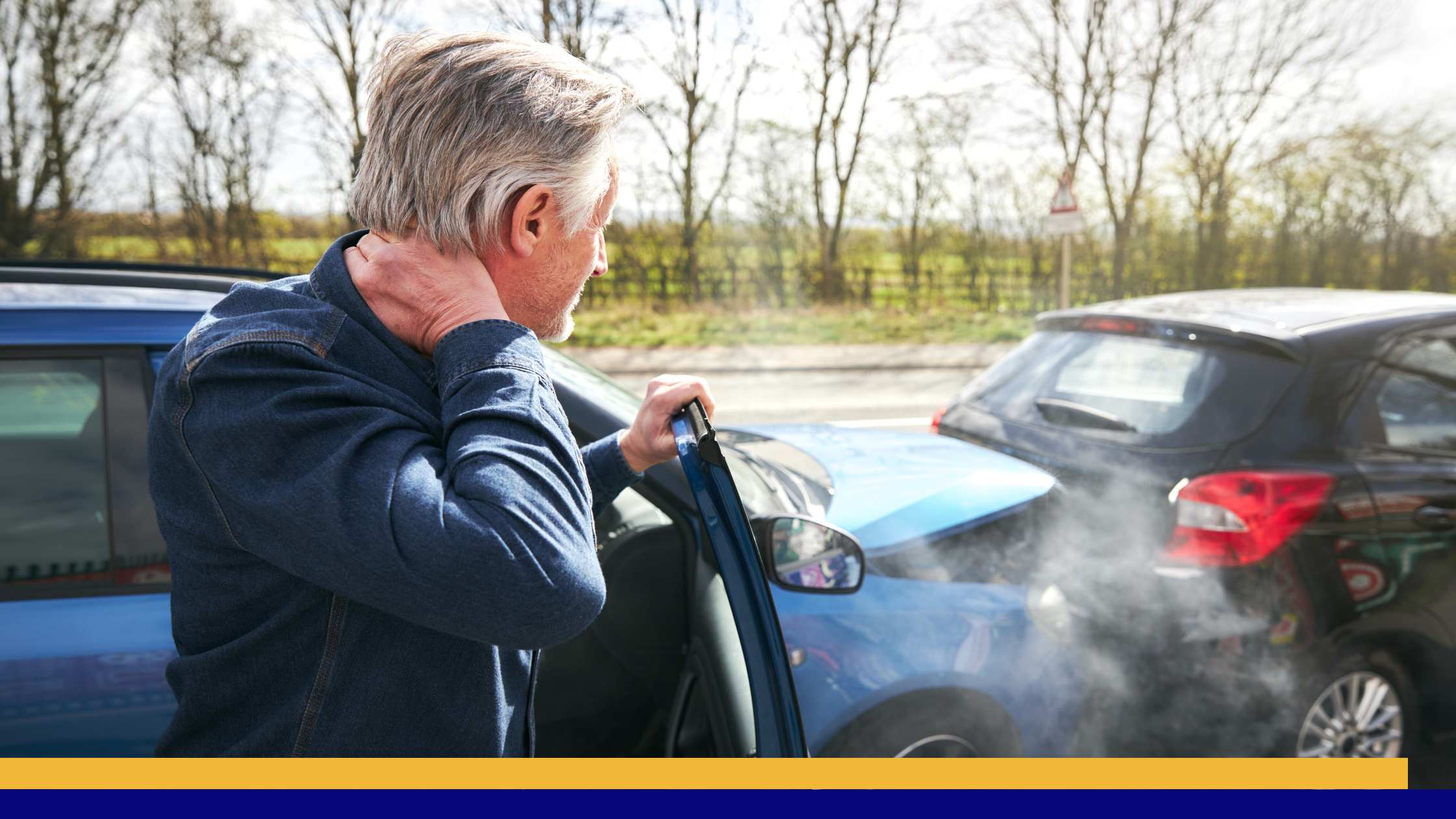
If you are physically able at the scene, call 911 and wait for a San Bernardino Police Department or California Highway Patrol officer to arrive. Get a copy of the incident report number before you leave. Photograph the entire scene: the roadway, skid marks, the final position of both vehicles, traffic signals, road defects, and your injuries. These photos may never be recreated exactly as conditions change within hours.
Collect the names and contact information of every witness present. Bystanders may have seen the at-fault driver run a red light, change lanes without signaling, or engage in other dangerous behavior your own perspective could not capture. Their statements carry substantial weight with insurance adjusters and juries alike.
Seek medical attention the same day, even if your injuries feel minor. Emergency room records, imaging results, and physician notes created close in time to the crash are among the strongest pieces of evidence in any motorcycle accident claim. Gaps in treatment or delayed care give insurers a basis to argue your injuries were not caused by the collision.
- Tip: Save all photographs to a cloud backup immediately. Phones get lost or damaged, and the metadata embedded in each image – time, date, and GPS location – can be critical proof that the photos were taken at the scene shortly after the crash.
Opening an Insurance Claim: The First 1 to 4 Weeks
After a motorcycle crash caused by another driver, you will typically deal with that driver’s liability insurer. You may also have an uninsured or underinsured motorist claim through your own policy if the at-fault driver carried insufficient coverage, a common situation in San Bernardino and across the Inland Empire.
Notify your own insurance carrier of the crash as required by your policy, but be extremely careful when speaking with the at-fault driver’s adjuster. Those conversations are recorded. Adjusters are trained to ask questions that elicit statements they can use to minimize your payout. You have no obligation to give a recorded statement to the opposing insurer.
Early in this phase, the adjuster may offer you a quick settlement. These offers almost always arrive before your medical picture is complete. Accepting a settlement closes your claim permanently. If your injuries turn out to be more serious than initially understood – which is common with spinal injuries, traumatic brain injuries, and internal damage – you will have no recourse. A motorcycle accident lawyer in San Bernardino can evaluate any offer against the full value of your claim before you sign anything.
During this same window, your attorney will begin the formal investigation. This includes ordering the police report, gathering traffic camera footage from the City of San Bernardino or Caltrans, obtaining the at-fault driver’s insurance policy limits, and sending spoliation letters to preserve any evidence the defendant controls.
- Tip: If a commercial vehicle, rideshare driver, or government-owned vehicle was involved in your crash, additional rules and shorter deadlines apply. Government entity claims must be filed within six months under Gov. Code §945.4. Do not assume the standard two-year window applies in these situations.
The Investigation and Medical Treatment Phase: Weeks 4 Through Several Months
This is often the longest part of the pre-litigation timeline. Your attorney is gathering evidence while you focus on recovering from your injuries. These two processes run simultaneously, and both are essential.
On the legal side, the investigation involves reconstructing exactly how the crash happened and who bears responsibility. Accident reconstruction specialists can analyze vehicle damage, road geometry, sight lines, and physical evidence to determine speed, point of impact, and driver behavior. Your attorney may also subpoena the at-fault driver’s cell phone records if distracted driving is suspected, or obtain surveillance footage from nearby businesses that may have captured the collision.
Medical records from every provider who has treated you – the emergency room, your primary care physician, orthopedists, neurologists, physical therapists, and mental health professionals – are collected and organized. California follows pure comparative negligence, which means the defense will scrutinize your treatment history for any gaps they can use to argue your injuries were pre-existing or that you failed to mitigate your damages. Consistent, documented treatment tells a very different story.
You should reach a point of maximum medical improvement before settling. This is the stage where your doctors can say with reasonable certainty what your long-term prognosis looks like: whether you will need future surgeries, ongoing therapy, adaptive equipment, or whether you face permanent limitations that affect your ability to work. Settling before this point risks leaving substantial compensation on the table.
- Tip: Keep a daily journal during your recovery. Document your pain levels, activities you cannot perform, the emotional toll of your injuries, and how the crash has affected your relationships and daily life. This record supports your claim for non-economic damages like pain and suffering, which can represent a significant portion of your total recovery.
Calculating Your Damages: What You Are Actually Owed
A motorcycle accident claim in San Bernardino can include several categories of compensation. Understanding them prevents you from accepting a settlement that only covers part of what you have lost.
Economic damages are the measurable financial losses tied directly to the crash. These include past and future medical bills, lost wages from time you missed work during recovery, reduced earning capacity if your injuries prevent you from returning to your former occupation, the cost to repair or replace your motorcycle and gear, and any out-of-pocket expenses such as transportation to medical appointments or home modifications for a disability.
Non-economic damages compensate for the human impact of the crash: physical pain and suffering, emotional distress, loss of enjoyment of activities you could engage in before the accident, and loss of consortium if the injuries have affected your relationship with a spouse or partner. California does not cap these damages in personal injury cases arising from motorcycle accidents.
In cases involving particularly reckless conduct – a driver who was drunk, street racing, or fleeing law enforcement – punitive damages may be available. These are designed to punish extreme misconduct rather than simply compensate the victim.
Demand, Negotiation, and the Decision to File Suit
Once you have reached maximum medical improvement and the full scope of your damages is known, your attorney will draft and send a demand letter to the at-fault driver’s insurer. This document sets out the facts of the crash, the evidence supporting liability, the complete accounting of your damages, and a specific dollar amount you are willing to accept to resolve the case.
Insurers typically respond with a counteroffer lower than the demand. This begins the negotiation phase. Many motorcycle accident cases in San Bernardino resolve through this back-and-forth without ever going to court. Your attorney’s knowledge of local jury verdicts, the strength of your evidence, and the insurer’s willingness to pay fair value all influence how quickly and favorably this phase concludes.
If the insurer refuses to offer a reasonable settlement, filing a personal injury lawsuit is the next step. Under CCP §335.1, you have two years from the date of the crash to file. Filing suit does not mean you are going to trial. The majority of cases that enter formal litigation still settle during the discovery process or before a jury is seated.
- Tip: Do not wait until the deadline approaches to consult an attorney. Filing suit requires preparation time, and courts in San Bernardino County have their own scheduling procedures. Starting the process early gives your legal team room to negotiate without the pressure of an expiring statute of limitations.
Litigation: From Filing Through Trial
Once a lawsuit is filed, the case enters formal litigation. The defendant is served, files a response, and the discovery process begins. Both sides exchange documents, answer written questions under oath called interrogatories, and take depositions – recorded statements from parties and witnesses given before a court reporter.
Discovery in a motorcycle accident case often uncovers information the insurance company was not willing to reveal voluntarily: internal claim notes, prior accident history of the at-fault driver, and communications between the adjuster and supervisors about how to handle your case. This information can significantly strengthen your negotiating position.
Most San Bernardino County Superior Court cases are also subject to mediation before trial. A neutral mediator meets with both sides and helps facilitate a settlement. This is often where cases that seemed headed for trial actually resolve.
If mediation fails and no settlement is reached, the case proceeds to trial. A jury hears the evidence, weighs credibility, and determines both liability and damages. Trials in complex motorcycle accident cases can last several days to a few weeks.
How Vetchtein Law Handles Motorcycle Accident Cases in San Bernardino
Robert Vetchtein has been representing injured riders and their families in Southern California since 2004. He understands that motorcycle accident cases carry a built-in bias: jurors and adjusters sometimes assume the rider was at fault simply because motorcycles are seen as inherently dangerous. Overcoming that assumption requires thorough investigation, well-organized evidence, and an attorney prepared to push back hard on unfair offers.
Vetchtein Law serves clients throughout San Bernardino, Riverside, Fontana, the Inland Empire, Newport Beach, and Orange County. The firm works on a contingency fee basis, which means you pay no attorney fees unless and until your case is won. Initial case evaluations are free and available 24 hours a day, seven days a week. If you need to speak with someone tonight, you can.
For more information on related topics, visit our pages on motorcycle accidents and personal injury claims throughout the Inland Empire.
Frequently Asked Questions
How long do I have to file a motorcycle accident lawsuit in San Bernardino?
Under CCP §335.1, you have two years from the date of the crash to file a personal injury lawsuit in California. If a government vehicle or government-maintained road condition contributed to the crash, a separate government tort claim must be filed within six months under Gov. Code §945.4. Missing either deadline will almost certainly bar your case entirely, so speak with an attorney as soon as possible after your accident.
What if I was partially at fault for the motorcycle crash?
California uses a pure comparative negligence system. You can still recover compensation even if you were partially responsible for the accident. Your total damages award is reduced by your percentage of fault. If a jury finds you 25% at fault, you recover 75% of your proven damages. The at-fault driver’s insurer may try to assign you more fault than is warranted to reduce their payout, which is one reason having legal representation matters.
How much is my motorcycle accident case worth?
No honest attorney can give you a dollar figure before reviewing your medical records, understanding your long-term prognosis, and fully assessing liability. Case value depends on the severity and permanence of your injuries, the strength of the evidence supporting fault, the at-fault driver’s insurance policy limits, and your own economic losses including lost wages and future earning capacity. An early estimate before the medical picture is complete will almost always undervalue your claim.
Do I need to give a recorded statement to the other driver’s insurance company?
No. You are not legally required to give a recorded statement to the at-fault driver’s insurance carrier. Adjusters use these recordings to identify statements that can be taken out of context to minimize your claim. You should report the accident to your own insurer as your policy requires, but consult with a motorcycle accident lawyer in San Bernardino before speaking with the opposing insurer.
What evidence is most important in a San Bernardino motorcycle accident case?
The most valuable evidence includes the official police or CHP crash report, photographs of the scene and your injuries taken immediately after the crash, traffic and surveillance camera footage, eyewitness statements, your complete medical records from the date of the crash forward, and expert reconstruction analysis if liability is disputed. Your attorney will work to preserve all of it as quickly as possible after you hire them.
Will my case go to trial?
Most motorcycle accident cases in California resolve through settlement before trial. However, if the insurance company refuses to offer fair compensation, filing suit and proceeding through litigation including potential trial is sometimes necessary to achieve a just result. Your attorney should be fully prepared and willing to take a case to trial when settlement negotiations fail.
Talk to a Motorcycle Accident Lawyer in San Bernardino Today
The weeks after a motorcycle crash are the most consequential for your legal case. Evidence fades, deadlines approach, and insurance companies have experienced teams working to limit what they pay you. You deserve the same level of preparation on your side.
Call Vetchtein Law at (888) 963-9999 any time, day or night, for a free case evaluation. You can also reach us online at our contact page. Robert Vetchtein and his team represent injured riders throughout San Bernardino, Riverside, Fontana, the Inland Empire, Newport Beach, and Orange County.
There is no fee unless we win.
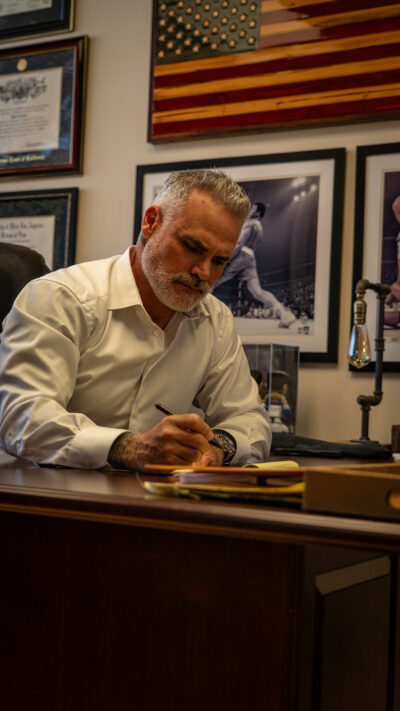
Meet attorney Robert Vetchtein.
This article is for informational purposes only. It is not legal advice and does not create an attorney-client relationship. Laws and deadlines change, and every case is different, so speak with a qualified California attorney about your situation.